Info
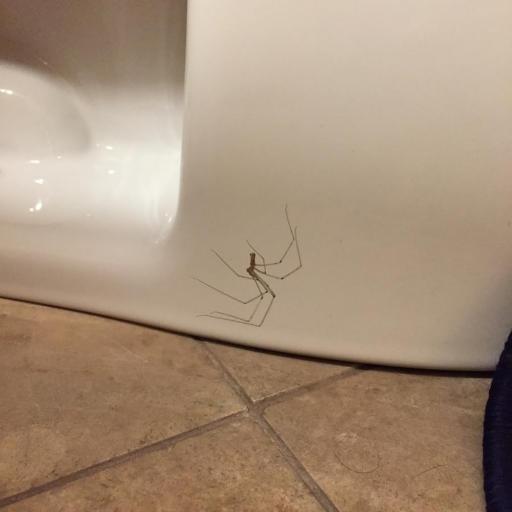
Often confused with its namesake "Daddy Long-legs" relatives, the Long-bodied Cellar Spider is a common household resident that acts as a silent guardian. While its spindly legs might cause a startle, this spider is one of the most beneficial arachnids to have in your home. It is a master architect of messy, non-sticky webs, often found hanging upside down in dark, quiet corners or basements.
🔍 How to Identify
- 🕷️ Leggy Build: The legs are exceptionally long, thin, and translucent, often reaching up to 50mm in span—nearly 6 times the length of its body.
- 🦴 Body Shape: The body is small (approx. 8mm) and cylindrical with a pale, grayish-tan color and faint dark markings on the cephalothorax.
- 🕸️ Web Structure: Unlike the symmetrical "orb" webs of garden spiders, this spider creates an irregular, tangled mass of silk that serves as a trap for unsuspecting pests.
🌲 Habitat & Ecology
- 🦟 The Spider Hunter: These spiders are surprisingly fierce predators; they are known to leave their webs to hunt other spiders, including species much larger and more venomous than themselves, such as the Black Widow.
- 🏠 Home Sweet Home: They are "synanthropic," meaning they thrive in human-made structures. They prefer stable, indoor environments like basements, attics, and sheds where they can avoid the harsh elements of the outdoors.
⚠️ Safety & Toxicity
- 🛡️ Harmless Resident: Despite an old urban legend claiming they are the "most poisonous spiders in the world," they are actually completely harmless to humans.
- 🦷 Weak Fangs: Their fangs are incredibly small and generally incapable of penetrating human skin. Even if they could, their venom is not medically significant to humans or common household pets like cats and dogs.
✨ Fun Fact
🌀 The "Whirligig" Defense: When a predator or a human gets too close, the Cellar Spider will rapidly vibrate its entire body in its web. This creates a "blur" effect that makes it nearly impossible for a predator to pinpoint its exact location!
More Details








