Info
Known affectionately as the Big Dipper Firefly, Photinus pyralis is the quintessential harbinger of summer evenings across North America. These "lightning bugs" are not actually flies at all, but bioluminescent beetles that turn backyards into magical light shows. They are charismatic "friends" to humans, serving as both a nostalgic symbol of childhood and a helpful predator in the garden.
🔍 How to Identify
- ✨ The Lantern: The most famous feature is the light-producing organ located on the underside of the abdomen, appearing as pale yellow or white segments even when not glowing.
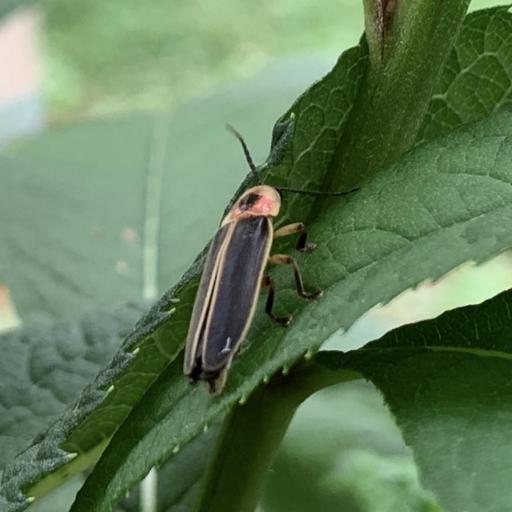
- 🛡️ The Head Shield: They possess a reddish-pink "pronotum" (a shield-like plate covering the head) marked with a distinct black spot in the center.
- 🪶 Wing Covers: Their elongated, flat bodies are covered by dark brown or black wing cases (elytra), usually bordered by a thin yellow margin.
🌲 Habitat & Ecology
- 🕺 The "J" Stroke: You can identify this specific species by its flight pattern; males fly in a distinctive "J" shape, swooping downward and then upward while emitting a long, yellow-green flash.
- 🐌 Underground Hunters: While adults spend their time looking for love, their larvae—often called "glowworms"—live in the soil. They are fierce predators that feast on slugs and snails, making them a gardener's best friend.
- 🏡 Home Turf: They prefer the transition zones where meadows meet forests, but they are highly adaptable to suburban lawns, provided the grass isn't treated with heavy pesticides.
⚠️ Safety & Toxicity
- ✅ Human Safe: These beetles are completely harmless to humans. They do not bite, sting, or carry any known diseases, and they are safe to catch and release.
- 🦎 Pet Danger: They contain defensive chemicals called lucibufagins. While harmless to you, these toxins are deadly to many reptiles and birds. Never feed a wild firefly to a pet lizard or frog, as even one can be fatal to them.
✨ Fun Fact
The light produced by Photinus pyralis is the most efficient light in the world! Unlike a standard lightbulb that wastes 90% of its energy as heat, a firefly’s chemical reaction is 100% light, meaning it loses zero energy to heat—if they got hot, they would essentially cook themselves while glowing!
More Details








