Info
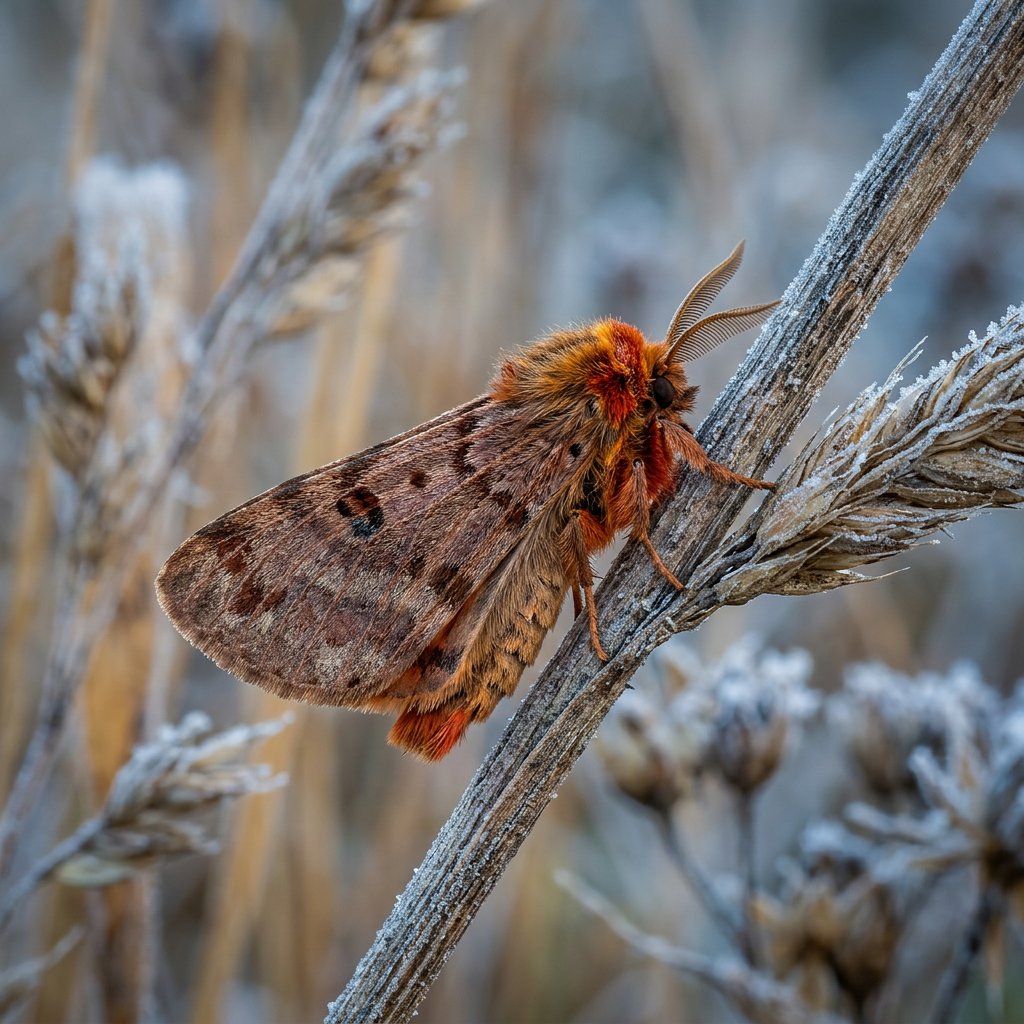
The Ruby Tiger Moth is a small but spectacular nocturnal gem often found flitting through meadows and gardens across the Northern Hemisphere. While it may look like a dusty brown leaf at rest, it hides a vibrant, fiery secret beneath its wings. Known for its incredibly hardy "woolly bear" caterpillars, this moth is a master of survival, often seen braving the chilly air of early spring and late autumn.
🔍 How to Identify
- 🦋 The Hidden Glow: Its forewings are a modest translucent reddish-brown, but the hindwings are a startling, bright ruby-red decorated with black spots.
- 🧸 Fuzzy Physique: The body is thick and covered in dense, soft hairs, giving it a cuddly, "teddy bear" appearance that helps it retain heat.
- 🐛 The Speedster Larva: The caterpillar is a dark, bristly "woolly bear" that is famously fast-moving, often seen scurrying across garden paths in search of a place to pupate.
🌲 Habitat & Behavior
- 🥗 Generalist Eater: As caterpillars, they aren't picky eaters, happily munching on dandelions, docks, plantains, and even goldenrod. This makes them very common in suburban backyards.
- 🌙 Night Owl: The adults are strictly nocturnal and are frequently seen spiraling around porch lights or glowing windows during the summer months.
- ❄️ Winter Warrior: Unlike many insects that perish in the cold, the Ruby Tiger caterpillar can survive being frozen solid, thawing out in the spring to finish its transformation.
⚠️ Safety & Toxicity
- ✅ Harmless Neighbor: These moths do not bite or sting and are completely non-toxic to humans and garden plants.
- 🧤 Bristly Hairs: While not poisonous, the stiff hairs on the "woolly bear" caterpillars can cause mild skin irritation or "caterpillar dermatitis" in people with sensitive skin if handled roughly. It’s best to admire their "racing" from a distance!
✨ Fun Fact
The Ruby Tiger Moth is a literal "solar heater." Its dark, hairy body is designed to absorb as much thermal energy as possible from the sun, allowing it to fly in temperatures that would leave other insects paralyzed by the cold.
More Details








