Info
🎨 The Tulip Tree Leaf Miner
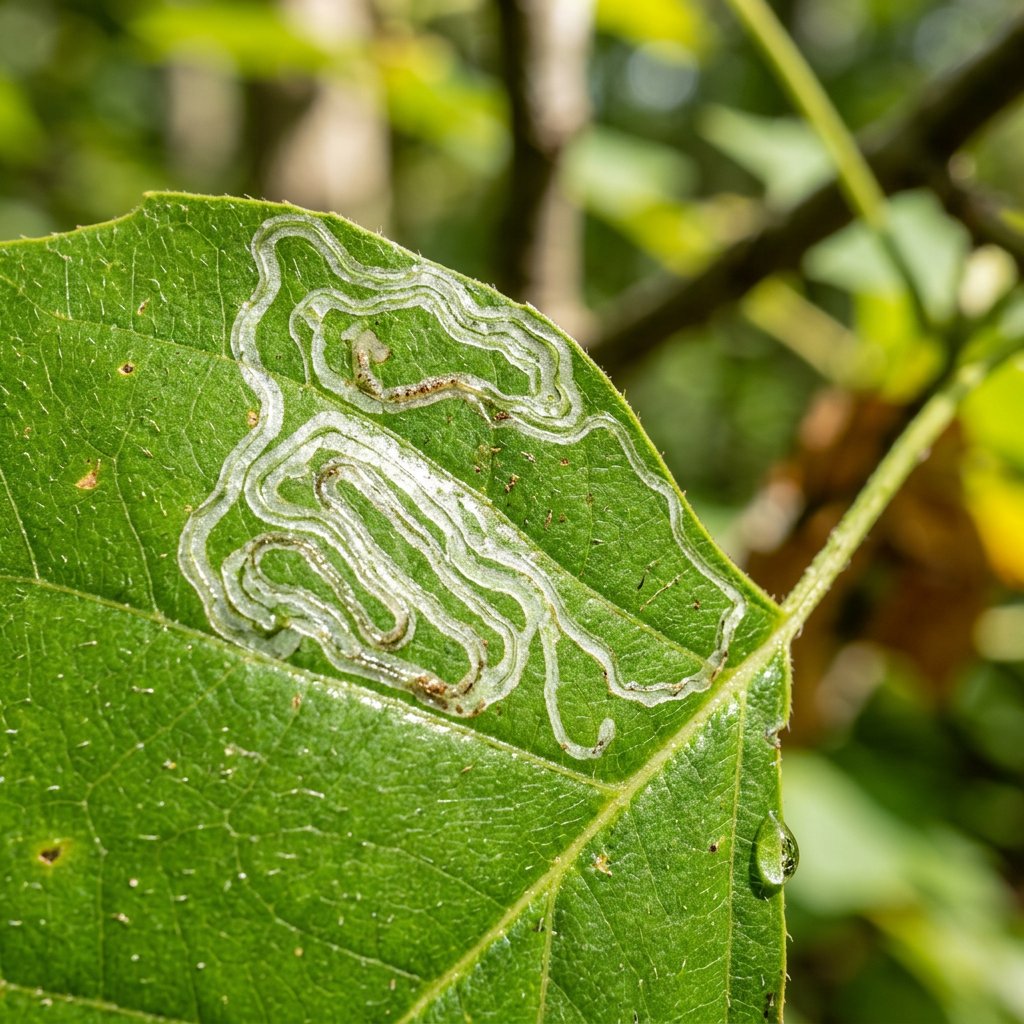
Meet the secret calligrapher of the canopy! The Phyllocnistis liriodendronella is a tiny, silvery micro-moth that spends its youth living inside the leaves of Tulip Trees. While you might never see the adult moth, which is smaller than a grain of rice, you will certainly notice the winding, silvery "maps" it leaves behind as it eats its way through the foliage.
🔍 How to Identify
- 🖼️ Serpentine Mines: The most obvious sign is the long, winding, white or silvery trail on the leaf's surface. These look like thin, glossy ribbons or "snail trails."
- 🐛 The Hidden Resident: If you look closely at the end of a fresh trail, you might see a tiny, flattened, pale green larva tucked safely between the upper and lower layers of the leaf.
- 🦋 The Adult Moth: A delicate, snowy-white moth with narrow, fringed wings. They are extremely elusive and usually only active at night or in the very early morning.
🌲 Habitat & Ecology
- 🌳 The Selective Diner: This insect is highly host-specific. It almost exclusively targets the Tulip Tree (Liriodendron tulipifera) and occasionally the Sweetbay Magnolia, making it a common sight in eastern North American forests and gardens.
- 🍃 Cosmetic Artist: While the "scribbles" might look alarming to a gardener, these miners rarely cause real harm to the tree. They are "foliar scavengers" that take a tiny portion of the leaf's energy without killing the branch or compromising the tree’s overall health.
- 🍂 Lifecycle Timing: You’ll likely see the most activity in mid to late summer as multiple generations of larvae begin their work, leaving the canopy looking slightly "etched."
⚠️ Safety & Toxicity
- ✅ Harmless to Humans: These insects are completely safe for humans and gardeners. They do not bite, sting, or carry diseases.
- 🐾 Pet Friendly: They are not toxic to dogs or cats. Even if a curious pet nibbles on a leaf containing a miner, there is no risk of poisoning.
- 🌿 Tree Health: No chemical intervention is usually required. Because the larvae are protected inside the leaf, sprays often don't reach them anyway; it's best to let nature's predators (like tiny parasitic wasps) keep their numbers in check.
✨ Fun Fact
The Phyllocnistis larva is a master of "clean living." To avoid getting sick or stuck in its own waste while trapped inside the leaf, it produces a very thin, liquid frass (waste) that dries quickly against the leaf walls, allowing it to keep mining without ever taking a "bathroom break!"
More Details








