Info
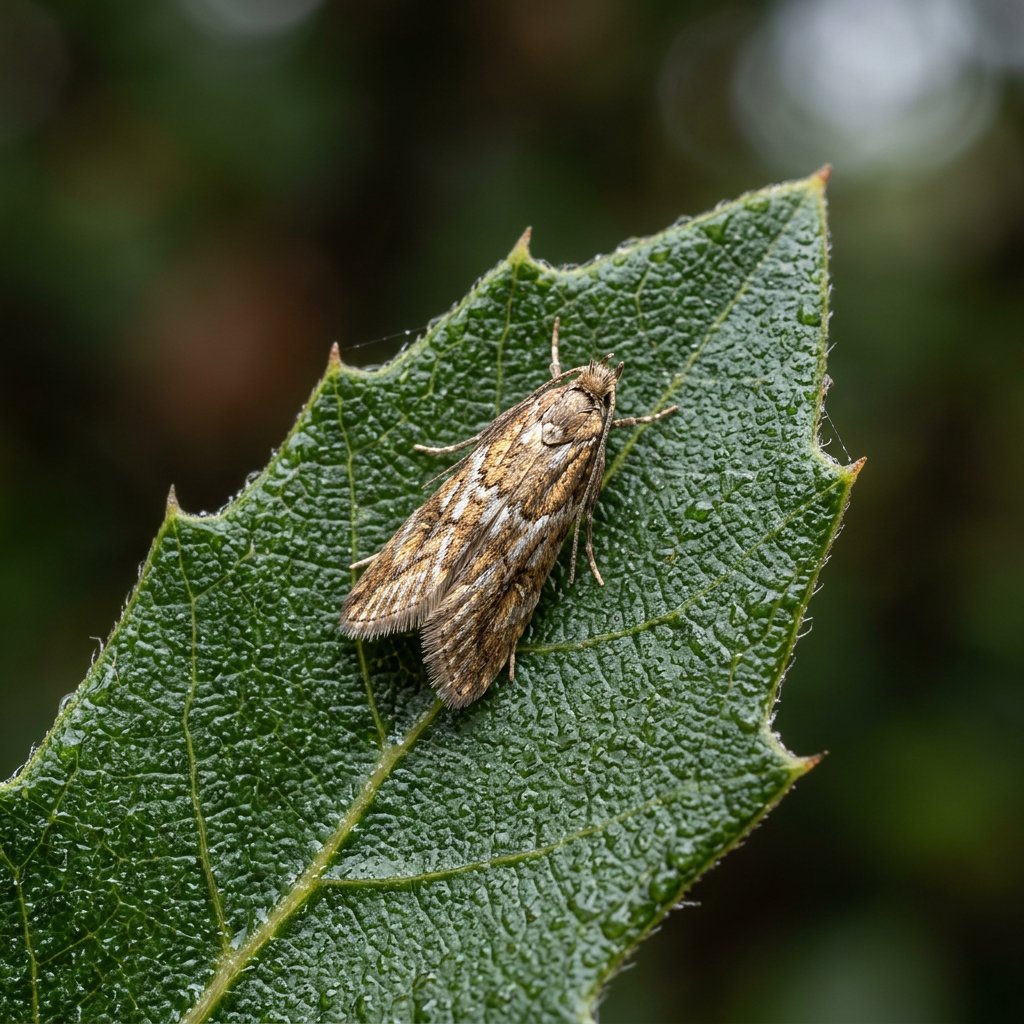
Known as the European Oak Leaf Miner, this tiny architect is more often identified by its "artwork" than its actual appearance. While the adult moth is a shimmering golden-silver speck, its larvae spend their youth hidden inside the secret corridors of oak, beech, and sweet chestnut leaves. They are master occupants of the "inner leaf," living entirely between the upper and lower skin of a single leaf.
🔍 How to Identify
- 🦋 The Adult Moth: A delicate, miniature moth with golden-bronze wings. If you look closely, you’ll see four white, chevron-shaped streaks edged with black, giving it a high-contrast, zig-zag appearance.
- 🍂 The Blotch Mine: Identification usually happens via the leaf. Look for oval, blister-like "mines" on the underside of the leaf. As the larva grows, it contracts the leaf, causing a characteristic wrinkle or fold in the tissue.
- 🎨 Upper Surface Clues: On the top side of the leaf, the "mine" appears as a pale, speckled, or silvery patch directly above where the larva is feeding inside.
🌲 Habitat & Ecology
- 🌳 Host Variety: Unlike many leaf miners that stick to one plant, Phyllonorycter messaniella is quite versatile. It is commonly found on Evergreen Oak (Holm Oak), Pedunculate Oak, Beech, and even Sweet Chestnut.
- 🏘️ Urban Survivors: This insect is a frequent guest in suburban gardens and city parks. It thrives wherever its host trees are planted, often reaching high populations in sheltered, urban microclimates.
- 🔄 Year-Round Presence: They are "multivoltine," meaning they produce several generations a year. In warmer climates or mild winters, you can find active larvae even in the middle of January inside evergreen leaves.
⚠️ Safety & Toxicity
- 🛡️ Harmless to People: This moth is completely harmless to humans and pets. It does not bite, sting, or produce any irritating hairs.
- 🌿 Tree Impact: While a heavy infestation can make a tree look "rusty" or brown by late summer, it is almost entirely a cosmetic issue. The moth rarely threatens the overall health or survival of a mature tree.
✨ Fun Fact
The larvae are so tiny and protected within the leaf that they have their own specialized "trash" system. They neatly stack their waste (known as frass) in a specific corner of the mine to keep their living quarters clean while they feed!
More Details








