Info
The Phyllophaga—better known as the June Bug or May Beetle—is the clumsy, buzzing harbinger of summer nights. Often heard before they are seen, these heavy-bodied beetles are famous for their chaotic flight patterns and their habit of "thumping" into window screens. While their loud buzzing and sudden landings might startle you, they are harmless giants of the twilight garden.
🔍 How to Identify
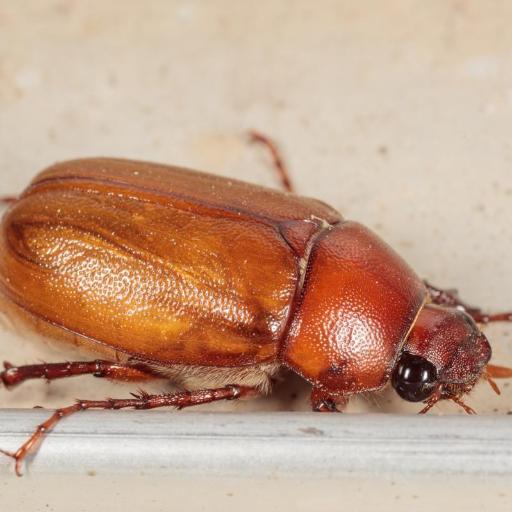
- 🪲 Body Shape: Robust, oval-shaped, and convex bodies, usually ranging from 12 to 25mm in length.
- 🎨 Coloration: Typically a deep reddish-brown, mahogany, or almost black, often appearing glossy or velvety under a flashlight.
- 🦵 Spiny Legs: Long, powerful legs equipped with tiny, noticeable spines that help them grip onto leaves, bark, or even your clothing.
- 🛡️ Hard Wing Covers: They have thick elytra (outer wings) that protect their delicate flying wings, giving them a "tank-like" appearance.
🌲 Habitat & Ecology
- 🌙 Nocturnal Activity: These beetles spend their days hiding in the soil or under leaf litter, emerging at dusk to feed on the foliage of broadleaf trees and shrubs like Oak, Walnut, and Rose.
- 💡 Light Attraction: They are intensely attracted to artificial light. This "phototaxis" is what draws them to porch lights, where they often exhaust themselves flying in circles.
- 🌱 Subterranean Youth: Before they become beetles, they live for years underground as "white grubs." They play a major role in the ecosystem by breaking down organic matter, though they are notorious for snacking on the roots of lawns and garden plants.
⚠️ Safety & Toxicity
- 🛡️ Completely Harmless: June Bugs are non-toxic and lack a stinger or mouthparts strong enough to bite humans. They are "gentle giants" of the insect world.
- 🧤 Prickly Grip: Their legs are designed for clinging to trees; if one lands on you, it might feel a bit prickly or "velcro-like," but it won't break the skin.
- 🐶 Pet Safety: While they aren't poisonous, if a dog or cat eats too many of them, the tough, crunchy shells (chitin) can sometimes cause a mild upset stomach.
✨ Fun Fact
- 🕰️ Patient Growth: Depending on the specific species and the climate, a June Bug may spend up to three years living in total darkness underground as a larva before finally emerging for just a few weeks of life as a flying adult!
More Details








