Info
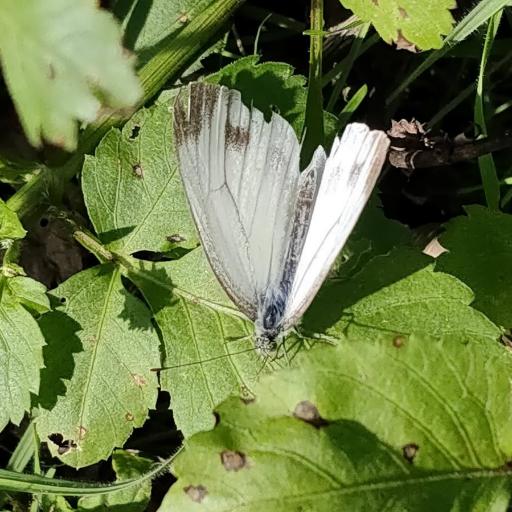
Often called the Oriental Veined White, this delicate butterfly is a common sight across the forests and mountain slopes of East Asia. While it looks like a simple white butterfly at first glance, its wings hold a map of intricate, smoky artistry that changes with the seasons. In various Eastern cultures, white butterflies are often seen as gentle symbols of wandering souls or the quiet arrival of spring.
🔍 How to Identify
- 🦋 Vein Patterns: The most striking feature is on the underside of the wings, where the veins are heavily "dusted" with grey or olive-green scales, making them look like delicate charcoal sketches.
- 📏 Wingspan: It is a medium-sized butterfly, typically spanning 50–60mm, with a slightly more rounded wing shape than its common garden cousins.
- 🎨 Seasonal Shifts: This species is dimorphic; the "Spring form" is usually smaller with very dark, bold veining, while the "Summer form" is larger and appears much whiter and paler.
🌲 Habitat & Ecology
- 🏔️ Woodland Preferences: Unlike the common Cabbage White that loves open farm fields, Pieris melete prefers the dappled sunlight of forest edges, damp mountain valleys, and riverside meadows.
- 🥬 The Wild Host: The larvae are specialists, feeding almost exclusively on wild plants in the mustard family (Brassicaceae). They are particularly fond of wild bittercress and toothworts found in shaded woodland soils.
⚠️ Safety & Toxicity
- ✅ Harmless Pollinator: This butterfly is a "friend" in every sense. It does not bite, sting, or carry diseases, and it serves as a vital pollinator for forest wildflowers.
- 🐶 Pet Safety: It is non-toxic to cats, dogs, and humans. While the caterpillars may taste bitter to birds due to the mustard oils in their diet, they pose no danger to curious pets.
✨ Fun Fact
Scientists often find Pieris melete nearly impossible to distinguish from its close relatives just by looking! In many cases, they have to study the butterfly's scent scales (androconia) under a microscope to confirm its identity, as each species produces a unique "perfume" to attract mates.
More Details