Info
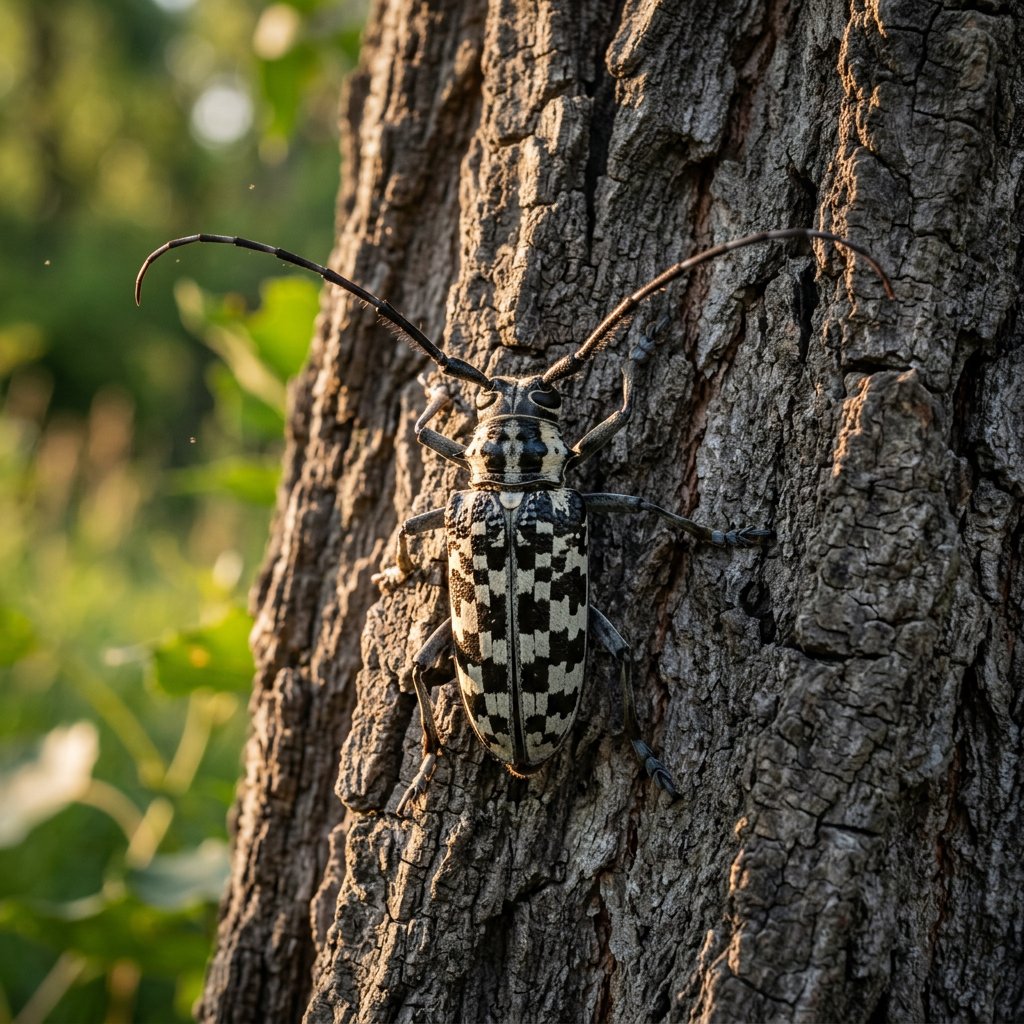
Meet the Cottonwood Borer, a beetle that looks like it was hand-painted by a minimalist artist. Known for its striking black-and-white "tile" pattern, this large insect is a frequent visitor to riverbanks and suburban gardens across North America. While its impressive size and long "horns" can be intimidating to the uninitiated, it is a fascinating, non-aggressive giant of the beetle world.
🔍 How to Identify
- 🎨 Bold Pattern: A stark, porcelain-white body covered in rectangular black spots, giving it a distinct checkerboard or "digital" appearance.
- 📡 Long Antennae: As a member of the Longhorn beetle family, it sports two massive, segmented antennae that are often as long as (or longer than) its entire body.
- 📏 Robust Frame: These are substantial insects, typically reaching 1 to 1.5 inches in length with a heavy, armored-looking exoskeleton.
🌲 Habitat & Ecology
- 🌳 Host Trees: These beetles are specialists. You will almost exclusively find them on or near Cottonwood, Poplar, and Willow trees, where they feed and lay their eggs.
- ⛏️ Underground Laborers: While you see the adults on the bark, the larvae spend nearly two years tunneling through the roots and base of the tree. This boring process can sometimes weaken young saplings, though mature trees usually tolerate the "renovations" just fine.
- 🍃 Summer Sightings: They are most active during the high heat of summer, usually appearing in July and August to mate and feed on tender leaf stems.
⚠️ Safety & Toxicity
- 🛡️ Harmless but Sharp: The Cottonwood Borer is not venomous and does not sting. It is generally docile and will try to walk away rather than fight.
- 🤏 Mandible Warning: Because they are designed to chew through wood, they have very strong jaws. If handled roughly, they can deliver a sharp, mechanical pinch. It’s best to observe them without picking them up.
- 🐾 Pet Safety: They are not toxic to dogs or cats, though the crunchy exoskeleton might cause a bit of dietary upset if a curious pet decides to make them a snack.
✨ Fun Fact
If you pick one up or startle it, the Cottonwood Borer might "shout" at you! They produce a distinct squeaking or buzzing sound by rubbing the segments of their thorax together—a defense mechanism known as stridulation designed to startle hungry birds.
More Details








