Info
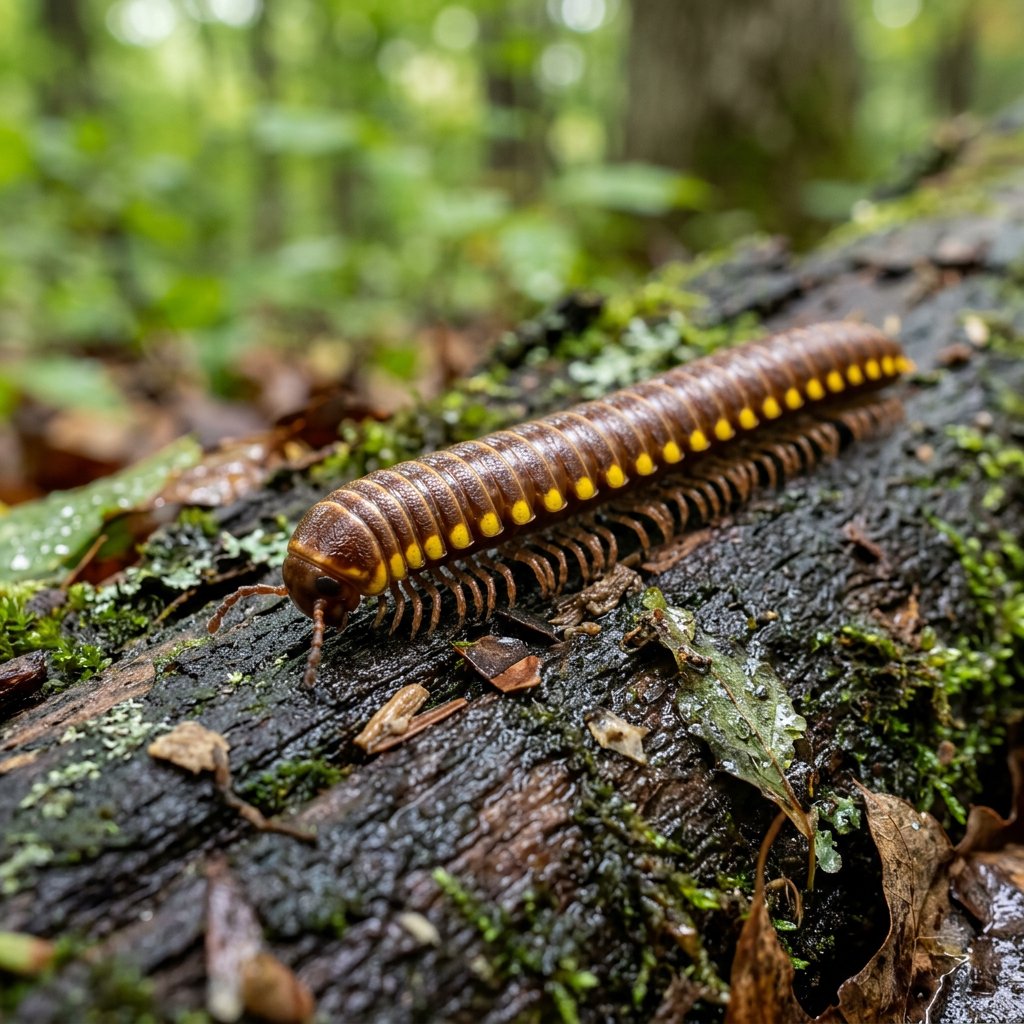
Commonly known as the Yellow-legged Flat-backed Millipede, this creature looks like a tiny, armored prehistoric tank patrolling the forest floor. While its many legs and rigid segments might look intimidating, it is a gentle giant of the leaf litter world. It plays a vital role in nature’s cleanup crew, turning dead leaves into rich soil.
🔍 How to Identify
- 🎨 Color Contrast: The body is typically deep charcoal or black, strikingly accented with bright yellow or orange "spots" along the edges and matching yellow legs.
- 🛡️ Flat Armor: Unlike common round millipedes, its body segments have lateral extensions called paranota, giving it a distinctively flat, wide appearance.
- 🏃 Leggy Movement: Despite having dozens of legs, it moves with a rhythmic, wave-like grace rather than the frantic scurrying seen in centipedes.
🌲 Habitat & Ecology
- 🍂 Nature’s Recycler: These millipedes are detritivores, meaning they spend their lives munching on decaying wood and damp leaf litter. They are excellent "recyclers" that help nutrients return to the soil.
- 💧 Moisture Seekers: You’ll rarely find them in the open sun. They prefer the "micro-climate" under rotting logs, flat stones, or thick layers of mulch where the air remains humid.
- 🕰️ Night Owls: They are primarily nocturnal or crepuscular, coming out when the humidity is highest to forage without drying out.
⚠️ Safety & Toxicity
- 🚫 Non-Aggressive: This millipede cannot bite or sting. It has no fangs and its only physical defense is to curl into a tight spiral to protect its soft underside.
- 🧪 Chemical Defense: When threatened, it secretes a liquid that contains small amounts of hydrogen cyanide as a deterrent to birds and rodents. This often smells strongly of bitter almonds or cherries.
- 🧼 Handle with Care: While not lethal to humans, the secretions can irritate eyes or sensitive skin. Always wash your hands after moving one out of your garden path, and keep curious pets from trying to eat them.
✨ Fun Fact
If you gently sniff the air near a disturbed Pleuroloma flavipes, you might notice a scent like marzipan or black cherries. This "sweet" smell is actually a chemical warning sign that tells predators, "I taste terrible!"
More Details








