Info
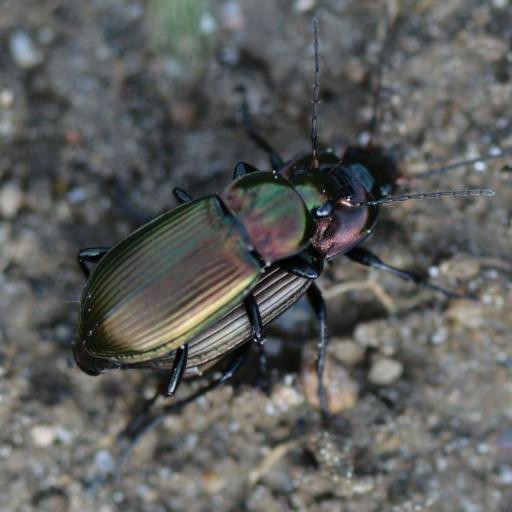
The Poecilus cupreus, commonly known as the Copper Ground Beetle, is a shimmering jewel of the soil. While its metallic armor looks like it belongs in a collector's display case, this beetle is actually a hard-working "super-soldier" for your garden. It is a dedicated predator that patrols the ground for unwanted pests, making it a prized ally for organic gardeners and farmers alike.
🔍 How to Identify
- 🪲 Iridescent Armor: Its most striking feature is its brilliant metallic luster. While often copper or bronze, individuals can appear emerald green, deep blue, or even violet depending on how the light hits them.
- 🛡️ Grooved Wing Covers: The elytra (hardened forewings) are marked with fine, elegant longitudinal ridges that run parallel down the length of its oval-shaped body.
- 🏃 Long, Lean Legs: It possesses long, slender legs designed for high-speed sprinting, allowing it to chase down fast-moving prey across open dirt.
🌲 Habitat & Ecology
- 🍽️ The Garden Guardian: This beetle is a voracious carnivore. It spends its days hunting soft-bodied insects, including aphids, fly larvae, and even small slugs that would otherwise feast on your plants.
- ☀️ Sun-Loving Hunter: Unlike many ground beetles that are strictly nocturnal, the Copper Ground Beetle is often active during the day, scurrying through sun-drenched fields, meadows, and backyard garden beds.
⚠️ Safety & Toxicity
- ✅ Friend of Humans: This insect is entirely harmless to humans and pets. It does not possess a stinger and carries no venom.
- 🤏 Defensive Pinch: If you pick one up, it may attempt a tiny "pinch" with its mandibles to defend itself. However, it is far too small to break human skin and is generally quite shy, preferring to run away rather than fight.
✨ Fun Fact
The "rainbow" colors you see on its back aren't actually made of pigment! They are "structural colors" created by microscopic layers in its exoskeleton that reflect light at different angles—the same scientific principle that makes bubbles and oil slicks look colorful.
More Details








