Info
Often found hanging under the eaves of houses or porches, the Northern Paper Wasp is a master architect of the insect world. Known for its distinct "umbrella-shaped" nests, this wasp is actually a beneficial garden ally that acts as a natural pest control agent. While their presence near doorways can be nerve-wracking, they are far more interested in hunting garden pests than bothering humans.
🔍 How to Identify
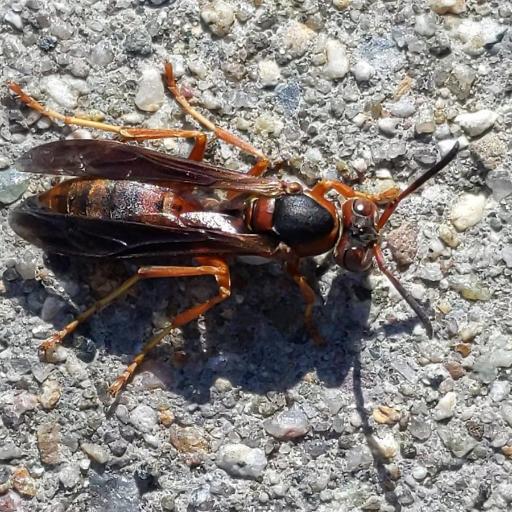
- 🐝 The Body: They have a slender, "wasp-waisted" body, typically mahogany brown to black with yellow or reddish-brown markings.
- 🪶 The Wings: Their wings are long and dark, often smoky-colored, and they fold them lengthwise along their back when resting.
- 🎭 The Face: These wasps have highly variable yellow patterns on their faces; surprisingly, no two wasps in a colony look exactly the same.
🌲 Habitat & Ecology
- 🏗️ Paper Architects: They build nests from wood fibers chewed into a grey, papery pulp. Unlike "Yellowjackets," their nests are open-faced (you can see the hexagonal cells) and usually hang by a single, sturdy stalk called a petiole.
- 🐛 Garden Protector: They are elite hunters. Adult wasps spend their days searching for caterpillars, beetle larvae, and flies to feed to their developing young, making them excellent partners for organic gardeners.
- 🌸 Hidden Pollinators: While the larvae eat meat, the adults primarily fuel themselves with sugar from flower nectar, assisting in pollination as they travel.
⚠️ Safety & Toxicity
- 🛡️ Defensive Status: They are considered "neutral to friendly" provided you give them space. They are much less aggressive than hornets or yellowjackets and typically only sting if the nest is touched or they are physically swatted.
- 💉 The Sting: Only females possess a stinger. Unlike honeybees, they do not lose their stinger and can strike multiple times if they feel the colony is under siege.
- 🚫 Allergy Warning: While their venom is generally low-risk to most people, individuals with known bee or wasp allergies should exercise extreme caution and seek medical help if stung.
✨ Fun Fact
Scientists have discovered that Polistes fuscatus has the incredible ability to recognize individual faces! They use the unique yellow and black markings on each other's heads to keep track of who is who in the colony, a level of social intelligence usually reserved for mammals.
More Details








