Info
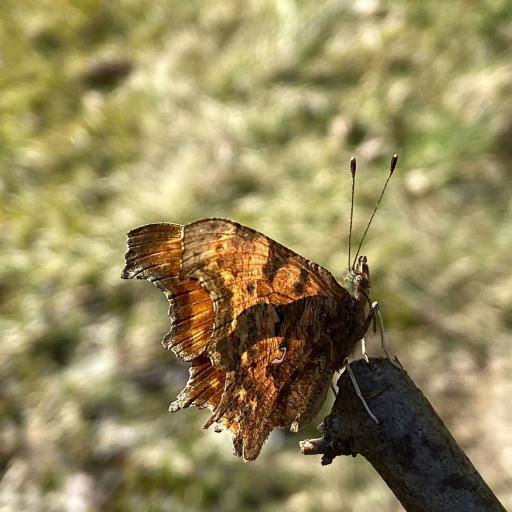
Known as the Comma Butterfly, this fascinating insect is a true master of disguise. While many butterflies boast perfectly rounded wings, the Comma looks as if someone has taken a pair of pinking shears to its edges, giving it a unique, "tattered" silhouette. This ragged shape is its secret weapon, allowing it to disappear completely against a backdrop of dead leaves or tree bark.
🔍 How to Identify
- 🦋 The Wing Shape: Its most striking feature is the deeply scalloped and irregular wing margins, which break up its outline to mimic a dry, crispy leaf.
- 🎨 Upperside Pattern: When open, the wings reveal a vibrant orange or golden-brown base peppered with dark chocolate-brown spots.
- 🖋️ The "Comma" Mark: On the dull, dark underside of the hindwing, there is a tiny, bright white mark shaped like a "C" or a comma, which gives the species its scientific name (c-album means "white C").
🌳 Habitat & Ecology
- 🍂 Master of Camouflage: You will most likely find them in woodland clearings, hedgerows, and quiet garden corners where they can bask in the sun on dark wood.
- 🍎 A Sweet Tooth: While they visit flowers like Buddleia and Bramble for nectar, they are particularly fond of "sugar hits" from overripe, fermenting fallen fruit in the autumn.
- 🌿 Nettle Lover: The larvae (caterpillars) resemble bird droppings to avoid predators and primarily feed on Common Nettles, Hops, and Elms.
⚠️ Safety & Toxicity
- ✅ Status: Completely harmless and a gardener's friend.
- 🖐️ Interaction: They do not sting or bite. However, like all butterflies, their wings are fragile and covered in tiny scales; it is best to observe them with your eyes rather than your hands.
✨ Fun Fact
The Comma butterfly has staged one of the most successful "comebacks" in the insect world. In the late 1800s, it nearly went extinct in the UK, but it has since recolonized almost the entire country, likely due to a warming climate and its ability to adapt its diet to different host plants.
More Details








