Info
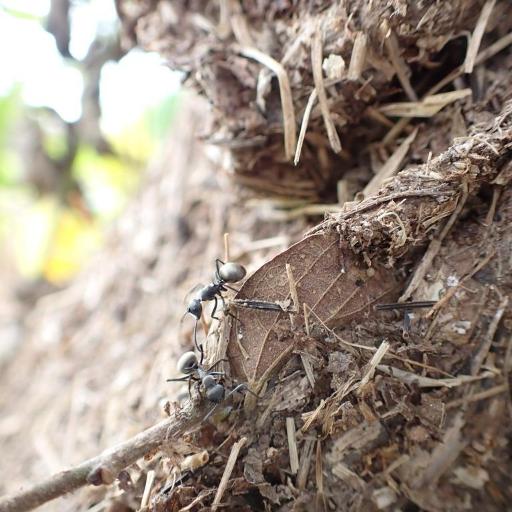
Often called the Black Spiny Weaver Ant, Polyrhachis dives looks like a miniature warrior clad in tarnished silver armor. These ants are the master architects of the insect world, famous for their ability to "weave" intricate nests out of silk and plant debris. Found throughout Southeast Asia and Northern Australia, they are highly social, living in massive colonies that can house hundreds of queens working in perfect harmony.
🔍 How to Identify
- ⚔️ Thoracic Spines: The most striking feature is a set of sharp, curved spines protruding from the thorax and the waist (petiole), which serve as a deterrent to hungry birds and lizards.
- ✨ Metallic Sheen: Their bodies are covered in dense, fine silver or golden hairs (pubescence), giving them a distinct metallic or velvety appearance rather than a shiny "plastic" look.
- 🖤 Compact Build: They have a robust, stocky body shape with a heart-shaped abdomen (gaster) that they often tuck forward when threatened.
🌲 Habitat & Ecology
- 🧶 The Weaver's Craft: Unlike many ants that dig into the earth, these ants build arboreal or semi-arboreal nests. They lack silk glands themselves, so they "use" their larvae like living glue sticks, gently squeezing them to produce silk that binds leaves and twigs together.
- 🍯 Aphid Farmers: They are active foragers with a sweet tooth. You will often find them "farming" aphids or scale insects, protecting them from predators in exchange for sugary honeydew.
- 🏰 Supercolonies: This species is highly "polygynous," meaning a single colony can have dozens or even hundreds of queens. This allows them to build massive, sprawling empires across multiple trees.
⚠️ Safety & Toxicity
- 🛡️ Defensive But Non-Stinging: Polyrhachis dives do not possess a stinger. However, they are not defenseless; they have strong mandibles and can bite.
- 🧪 Formic Acid: If the colony is disturbed, they will stand their ground and spray formic acid from their abdomen into the bite wound, which can cause a sharp, temporary stinging sensation.
- 🐾 Pet/Child Safety: They are generally harmless to humans and pets unless their nest is intentionally crushed. They are not considered a household pest as they prefer nesting in vegetation.
✨ Fun Fact
In traditional Chinese medicine, Polyrhachis dives has been used for centuries in tonics and teas, believed by some to boost the immune system and provide "boundless energy"—though most people today prefer just watching their incredible weaving skills from a distance!
More Details








