Info
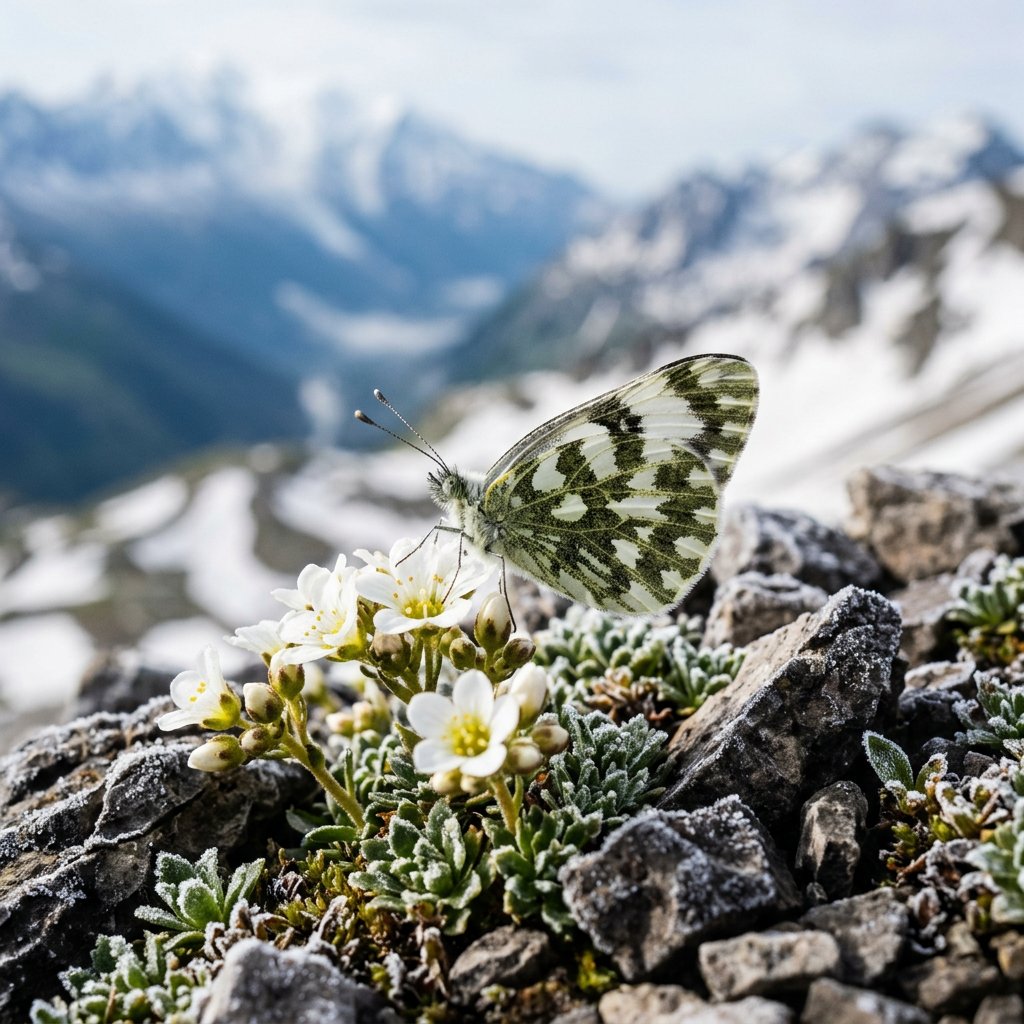
Known as the Peak White or the Lofty White, this butterfly is a true high-altitude mountaineer. While most butterflies prefer lush gardens and warm meadows, Pontia callidice thrives in the thin air of the Alps, Himalayas, and Pyrenees, often seen fluttering over rocky scree slopes where few other insects dare to go. It is a symbol of resilience, surviving in some of the harshest environments on Earth.
🔍 How to Identify
- ❄️ Wing Patterns: The upper side is a crisp white with distinct black or dark-grey spots near the tips and edges, giving it a checkered appearance.
- 🌿 Underside Camouflage: The underside of the hindwings features a stunning "mossy" pattern of greenish-grey and yellow veins, which helps it vanish against mountain lichens when it rests.
- 🧶 Fuzzy Thorax: Its body is noticeably hairier than lowland butterflies, a natural "fur coat" designed to trap heat in freezing alpine temperatures.
🏔️ Habitat & Ecology
- 🧗 The Alpine Specialist: You won’t find this butterfly in your backyard unless you live above the treeline. It prefers altitudes between 2,000 and 4,500 meters, navigating gale-force winds with surprising agility.
- 🥗 Cruciferous Diet: As a caterpillar, it feeds almost exclusively on hardy plants in the mustard family (Brassicaceae) that grow between rocks, such as Alpine Rockcress.
- ⚡ Low-Flying Tactics: To avoid being swept away by mountain gusts, it flies very low to the ground, hugging the contours of the rocks and jumping from one sun-warmed stone to another.
⚠️ Safety & Toxicity
- 🛡️ Harmless Friend: The Peak White is completely harmless to humans. It does not bite, sting, or carry any toxins.
- 🐾 Pet Safety: It is non-toxic to pets. However, because it lives in such fragile high-altitude ecosystems, it is best enjoyed from a distance to avoid trampling the rare alpine flora it depends on.
✨ Fun Fact
The Peak White is a biological masterpiece of solar heating. Its dark wing veins aren't just for decoration; they act like tiny solar panels, absorbing the sun's rays to warm up its flight muscles quickly in the freezing mountain mornings.
More Details








