Info
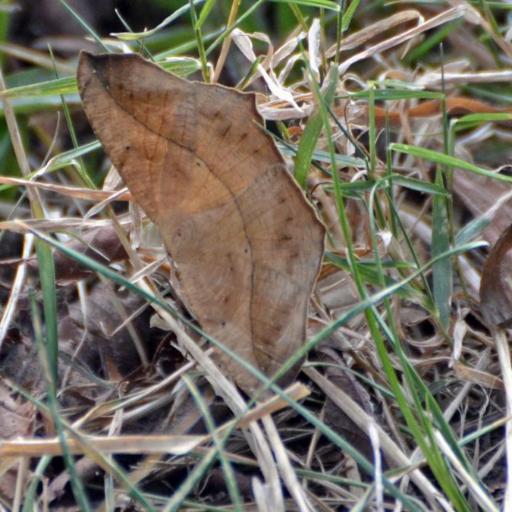
The Large Maple Spanworm (Prochoerodes lineola) is a master of disguise that frequently visits garden lights across North America. Often mistaken for a stray autumn leaf, this moth belongs to the "geometer" family, a name meaning "earth-measurer" because of the way its caterpillars loop along branches. It is a subtle, elegant resident of deciduous forests that blends seamlessly into the shadows of the trees it calls home.
🔍 How to Identify
- 🦋 Hooked Wingtips: The most striking feature is the "falcate" or hooked tips of the forewings, which give the moth a jagged, leaf-like silhouette.
- 📏 The Signature Line: A distinct, dark brown line runs almost perfectly straight across both the forewings and hindwings when the moth is at rest.
- 🎨 Variable Camouflage: Their color can range from a pale sandy tan to a rich, woody brown, often speckled with tiny dark dots that look like fungal spots on a dead leaf.
🌲 Habitat & Ecology
- 🌳 Forest Generalist: While named after the Maple, these moths aren't picky eaters; their larvae thrive on a variety of plants including birch, oak, soybeans, and even some berries.
- 🐛 Twig Mimicry: As caterpillars (inchworms), they have a remarkable defense mechanism where they hold their bodies stiff and straight at an angle from a branch, looking identical to a small, dead twig.
- 🌙 Nocturnal Visitor: Adults are strictly nocturnal and are famous for their attraction to porch lights, where they will often sit perfectly still for hours, relying on their camouflage to hide from predators.
⚠️ Safety & Toxicity
- ✅ Completely Harmless: This moth is a "gentle neighbor." It possesses no sting, no bite, and no chemical irritants that can harm humans or pets.
- 🌿 Low Garden Impact: While the caterpillars eat leaves, they rarely appear in high enough numbers to cause significant damage to backyard trees or ornamental plants.
✨ Fun Fact
The Large Maple Spanworm is so committed to its leaf disguise that it even has "veins" on its wings that mimic the skeletal structure of a real leaf, helping it vanish against the forest floor during the day.
More Details








