Info
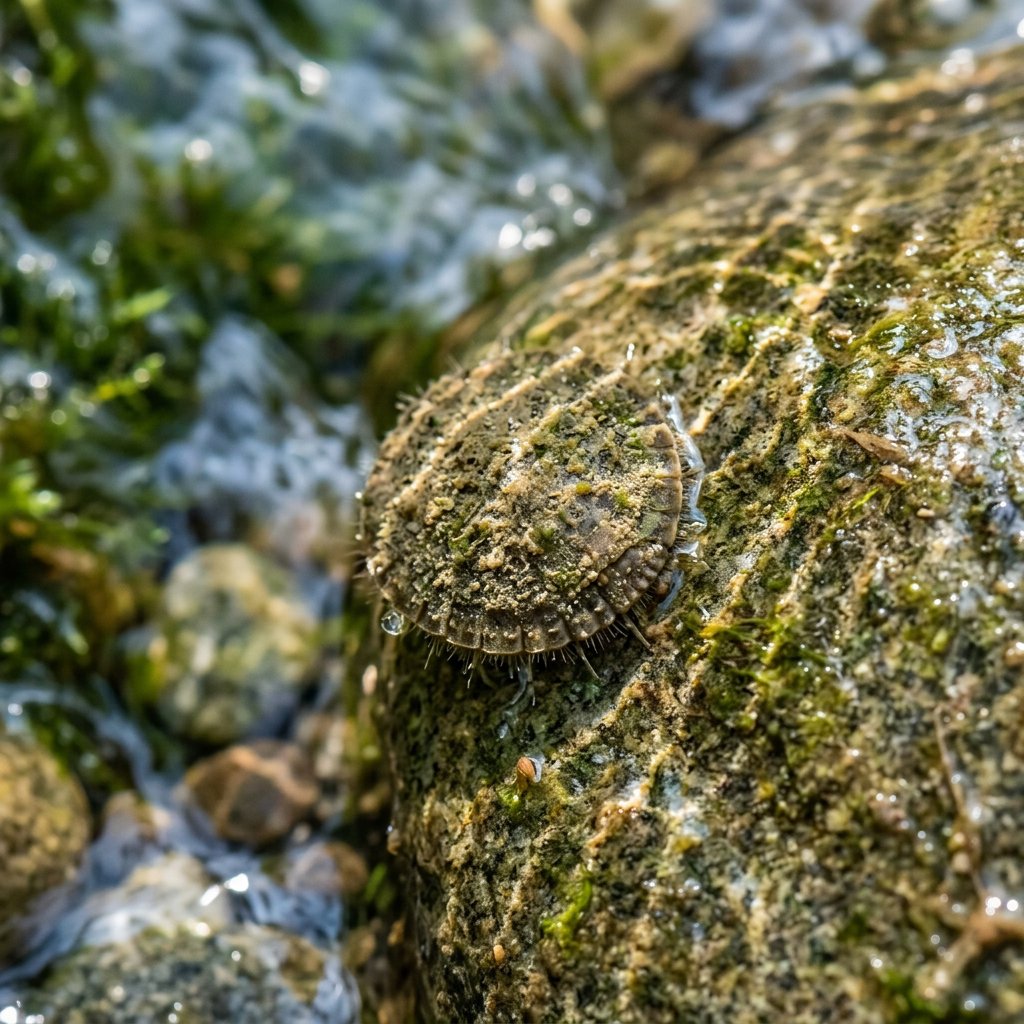
While you might find them clinging to aquatic vegetation, the Psephenidae is not a plant—it is a fascinating family of beetles commonly known as Water Pennies. They earn their name from their larvae, which look like tiny, flat copper coins stuck to the underside of river rocks. They are celebrated by environmentalists as a "canary in the coal mine" for water health.
🔍 How to Identify
- 🪙 The "Penny" Shape: The larvae are remarkably flat, oval, and disc-like, usually colored in shades of copper, tan, or dark brown to blend in with river stones.
- 🛡️ Hidden Limbs: From above, you cannot see any legs or antennae; the body plates extend outward like a shield, allowing the insect to suction itself to surfaces.
- 🪲 The Adult Form: The adult beetles are small (3–6mm), drab, and slightly fuzzy. They are much less famous than their "penny" children and are often seen scurrying near the water's edge.
🌲 Habitat & Ecology
- 🌊 Rushing Rapids: You will almost never find these in stagnant ponds. They thrive in fast-moving, "riffle" sections of streams where the water is highly oxygenated.
- 🥗 Algae Scrapers: The larvae act as tiny underwater lawnmowers. They spend their days scraping algae and biofilms off the surface of rocks, playing a vital role in keeping stream beds clean.
- 🧪 Bio-Indicators: These insects are extremely sensitive to pollution and low oxygen. If you find a colony of Water Pennies, it is a biological "seal of approval" that the water is clean and healthy.
⚠️ Safety & Toxicity
- ✅ Completely Harmless: Water Pennies are "friends" of the highest order. they do not bite, sting, or carry any diseases.
- 🛡️ Fragile Nature: While safe to touch, they are very delicate. If you peel one off a rock to look at it, do so gently, as their suction is strong and their body plates can be damaged by force.
✨ Fun Fact
Water pennies are masters of hydrodynamics! Their body shape is so perfectly engineered that the faster the water flows over them, the more they are pressed down against the rock. This natural suction is so effective that they can withstand torrential currents that would wash away almost any other creature.
More Details








