Info
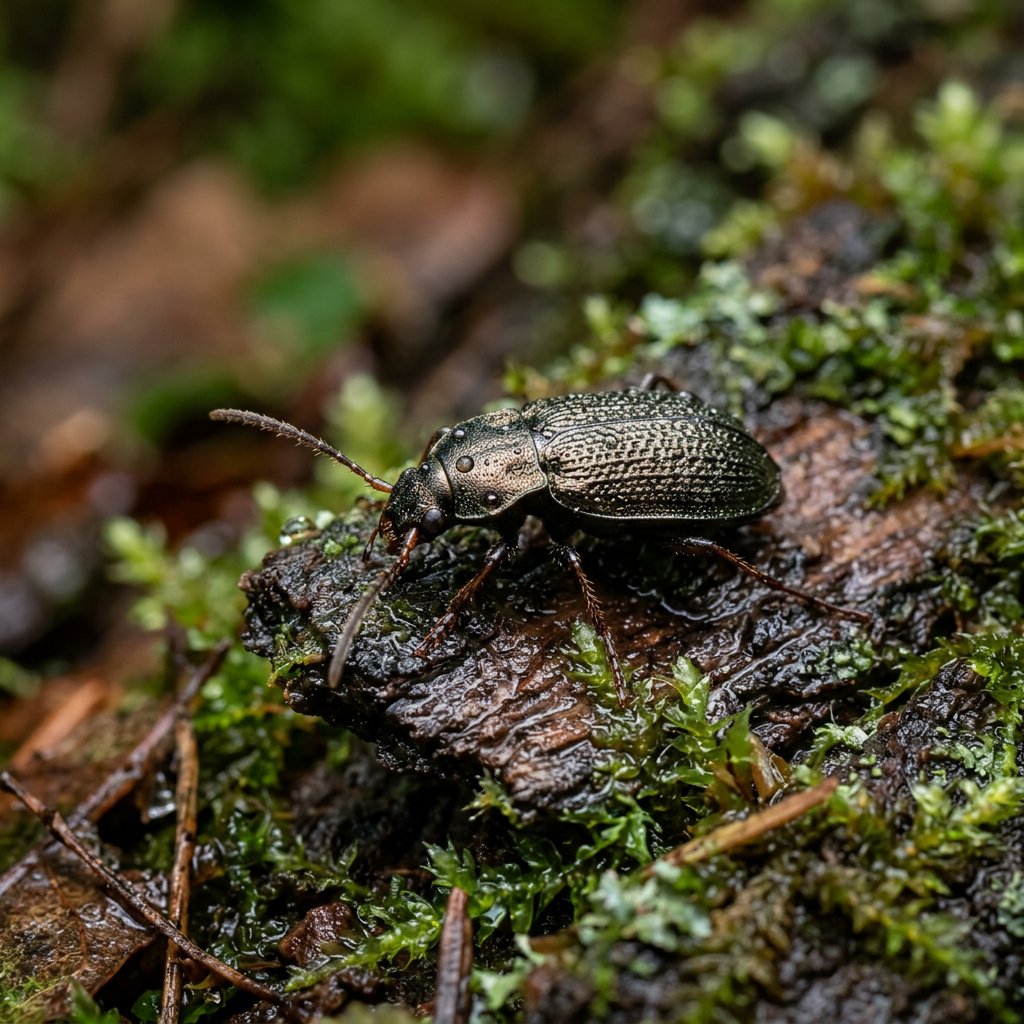
Meet Hiller’s Weevil, a tiny, shimmering world traveler that hitched a ride from East Asia to North America at the turn of the millennium. Often looking like a living piece of copper or bronze jewelry, this beetle belongs to the "broad-nosed weevil" family. While it is technically an invasive species in many regions, it is generally treated as a minor garden guest rather than a major threat.
🔍 How to Identify
- 🛡️ Iridescent Armor: Their bodies are covered in specialized scales that give them a metallic, copper, or brownish-gold sheen, which can shift in color depending on the light.
- 👃 The "Blunt" Snout: Unlike the long, needle-like snouts of some weevils, this species has a short, broad rostrum (nose) that makes its face look somewhat square or "bulldog-like."
- 📏 Micro Size: They are incredibly small, usually measuring only 4 to 5 millimeters in length—about the size of a grain of rice.
🌲 Habitat & Ecology
- 🌿 Leaf Lovers: These insects are generalist herbivores. They enjoy "notching" the edges of leaves on a variety of deciduous trees and shrubs, including oaks, maples, and ornamental garden plants like Azaleas.
- 🎭 Master of Disguise: When they feel threatened, Hiller’s Weevils are famous for "thanatosis"—tucking in their legs and falling off a leaf to play dead. They blend in perfectly with the soil or mulch below, making them nearly impossible to find.
- 🗺️ Urban Explorers: You are most likely to find them in suburban gardens, parks, and at the edges of deciduous forests where their favorite host plants are abundant.
⚠️ Safety & Toxicity
- ✅ Harmless to People: Hiller’s Weevils are physically incapable of biting or stinging humans or pets. They have no venom and do not carry diseases.
- 🌱 Minor Garden Pest: While they do eat leaves, the damage is usually cosmetic (small notches on the leaf edges) and rarely threatens the overall health of a mature tree or shrub. No aggressive chemical intervention is usually necessary.
✨ Fun Fact
Under a microscope, the "shimmer" on this weevil’s back isn't a solid color; it is actually made of thousands of tiny, overlapping circular scales that act like sequins on a dress, protecting the beetle's shell while providing its signature metallic look!
More Details








