Info
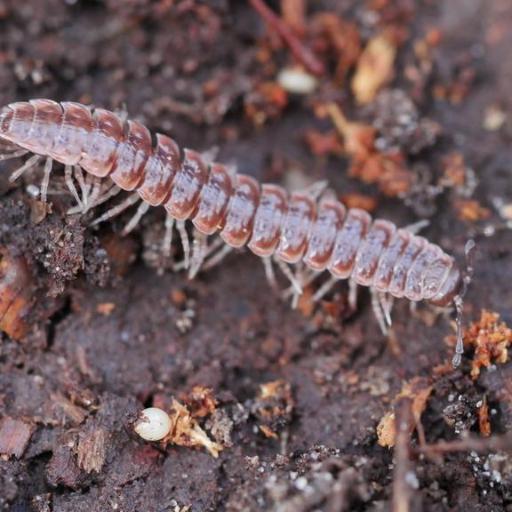
Often found hidden under a damp log or beneath a pile of autumn leaves, Pseudopolydesmus serratus is a master of the underworld. Commonly known as the Flat-backed Millipede, this creature looks more like a piece of armored jewelry than a common bug. It plays a vital role as a forest janitor, tirelessly breaking down organic debris into nutrient-rich soil for your plants.
🔍 How to Identify
- 🍂 Segment Shape: Unlike the cylindrical millipedes most people are used to, this species has flat, plate-like extensions called paranota on each segment, giving it a "serrated" or ridged appearance along its sides.
- 🌸 Pink Accents: The body is generally a deep mahogany or tan, but the edges of each segment often feature a distinct pinkish or reddish tint that glows against the dark soil.
- 🦶 Leg Placement: If you look closely, you will see two pairs of legs per body segment, a signature millipede trait, though they are usually tucked neatly under its wide "wings."
🌲 Habitat & Ecology
- 🍄 The Recycling Crew: These are strict detritivores, meaning they only eat dead and decaying organic matter. They are ultimate "friends" to the gardener, acting as a natural composting system that turns old leaves into fertilizer.
- 💧 Moisture Seekers: You won't find them in dry, sunny areas. Because they lack a waxy coating on their shells, they must stay in damp leaf litter, rotting logs, or moist mulch to prevent themselves from drying out.
⚠️ Safety & Toxicity
- 🛡️ Chemical Defense: They do not bite or sting and have no venomous fangs. However, when they feel threatened, they may coil into a tight spiral and release a defensive chemical.
- 🧴 Almond Warning: This defensive liquid contains trace amounts of hydrogen cyanide, which smells like bitter almonds. While not dangerous to humans in such small amounts, it can cause skin irritation or a burning sensation in the eyes. Always wash your hands after handling one, and keep them away from curious pets who might try to eat them.
✨ Fun Fact
The "almond" scent produced by these millipedes is a classic biological warning. While humans might find the smell pleasant, to a bird or a small rodent, it is a "Do Not Eat" sign that says this crunchy snack is actually quite toxic!
More Details








