Info
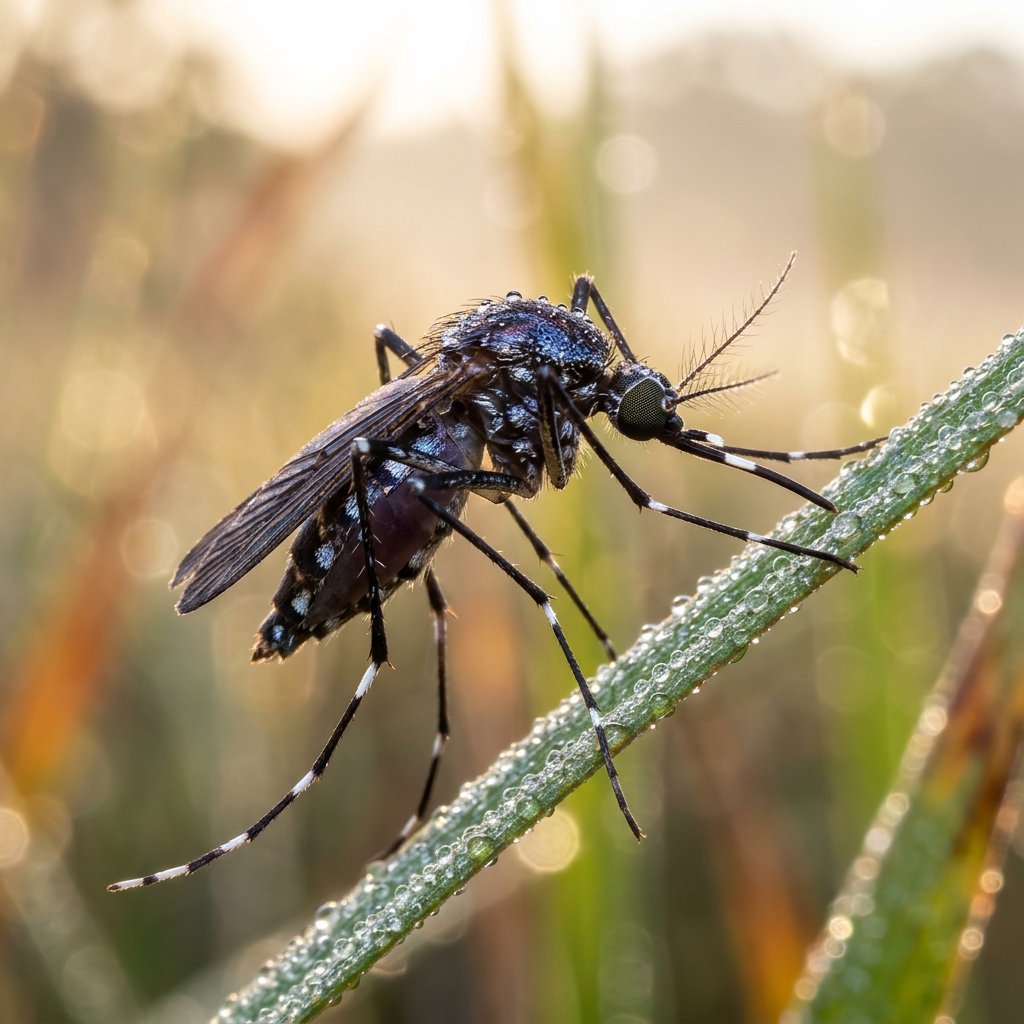
Known as the "Dark Rice Field Mosquito," Psorophora columbiae is a robust and persistent insect often found in agricultural settings and floodplains. Despite the "plant" label sometimes mistakenly associated with it in search queries, this is a formidable member of the mosquito family. It is famous for its "boom and bust" population cycles, appearing in massive swarms almost overnight following heavy summer rains or field irrigations.
🔍 How to Identify
- 🦵 Banded Legs: Look for distinct white or pale rings on its dark legs, which give it a striped appearance.
- 🦟 Sturdy Build: It is significantly larger and more "heavy-bodied" than the common house mosquito (Culex).
- 🏁 Speckled Wings: The wings are covered in a mix of dark and light scales, creating a dusty, salt-and-pepper pattern when viewed closely.
🌲 Habitat & Ecology
- 🌾 Agricultural Ties: As the name suggests, it thrives in rice fields, but also inhabits grassy pastures, roadside ditches, and any low-lying area prone to temporary flooding.
- 🌧️ Floodwater Lifecycle: Unlike mosquitoes that lay eggs directly on water, this species lays eggs on moist soil. The eggs can stay dormant for months or even years, hatching simultaneously the moment they are submerged by rain or irrigation.
- 🐄 Livestock Impact: While they do target humans, they are major pests for cattle; in extreme swarms, their sheer numbers can cause "blood loss" stress in livestock.
⚠️ Safety & Toxicity
- 💥 Aggressive Biters: They are persistent, "vicious" biters that are active at dusk and during the night, though they will bite during the day if their grassy resting spots are disturbed.
- 🐕 Pet Health: They are known vectors for Dog Heartworm (Dirofilaria immitis). Ensure your pets are on preventative medication if you live in flood-prone areas.
- 🌡️ Disease Vector: While not the primary carrier for most human diseases, they are capable of transmitting West Nile Virus and various types of encephalitis.
✨ Fun Fact
✨ The Waiting Game: The eggs of Psorophora columbiae are incredibly resilient; they have been known to survive in bone-dry soil for over three years, just waiting for a single afternoon thunderstorm to bring them to life!
More Details








