Info
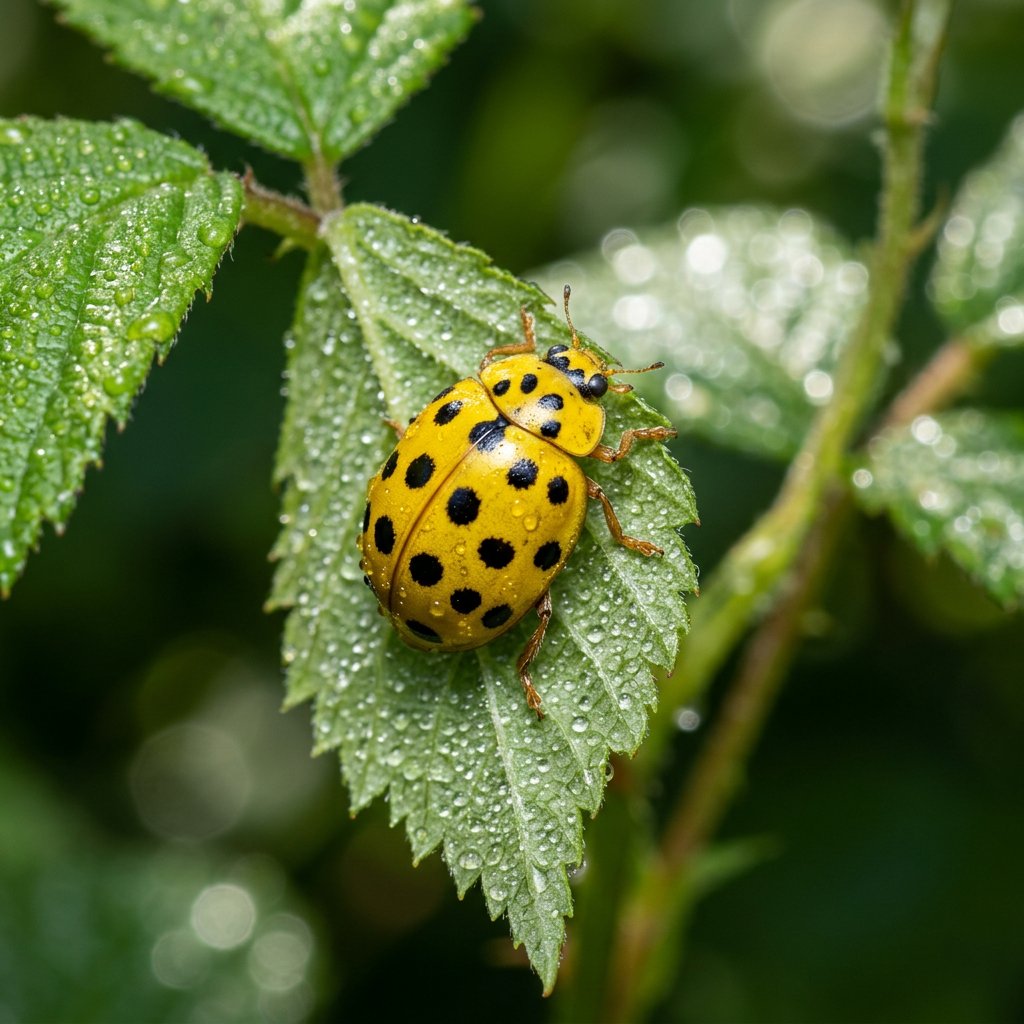
Often called the 22-spot Ladybird, this miniature beetle is a bright splash of lemon yellow in the garden. Unlike its famous red cousins who hunt for aphids, this little lady prefers a "vegetarian" diet, spending its days grazing on fungal growth. It is a tiny, polka-dotted guardian that works tirelessly to keep your plants' leaves clean.
🔍 How to Identify
- 🎨 Lemon Glow: Features a vibrant, neon-yellow body that stands out sharply against green foliage.
- 🔢 The Count: True to its name, it boasts 22 distinct black spots across its wing cases (elytra).
- 📏 Micro-Sized: It is significantly smaller than the common 7-spot ladybird, usually reaching only 3 to 4 millimeters in length.
- 🏁 Patterned Cape: The plate behind its head (the pronotum) is also yellow and typically decorated with 5 additional black spots.
🌲 Habitat & Ecology
- 🍄 The Mildew Specialist: This insect is a specialist feeder that grazes exclusively on powdery mildew. If you see a cluster of them on your zucchini or rose leaves, they are likely cleaning up a fungal infection for you.
- 🌿 Low-Level Dweller: They prefer low-growing vegetation, grasslands, and shrubs. They are particularly fond of "hogweed" and other large-leafed plants where mildew is easy to find.
- 🏡 Garden Friend: Because they consume harmful fungi, they are considered highly beneficial biological control agents for gardeners.
⚠️ Safety & Toxicity
- 🛡️ Gentle Ally: These beetles are completely harmless to humans and pets. They do not bite, sting, or carry diseases.
- 💛 Reflex Bleeding: Like other ladybirds, if they feel threatened, they may secrete a pungent yellow liquid (hemolymph) from their leg joints. This is a harmless defense mechanism meant to taste bad to birds, but it can leave a tiny, smelly stain on your skin.
✨ Fun Fact
✨ While most ladybirds are celebrated as "pest hunters," the 22-spot Ladybird is a "fungivore." It is one of the few ladybird species globally that has evolved to ignore insects entirely in favor of eating mushrooms and molds!
More Details








