Info
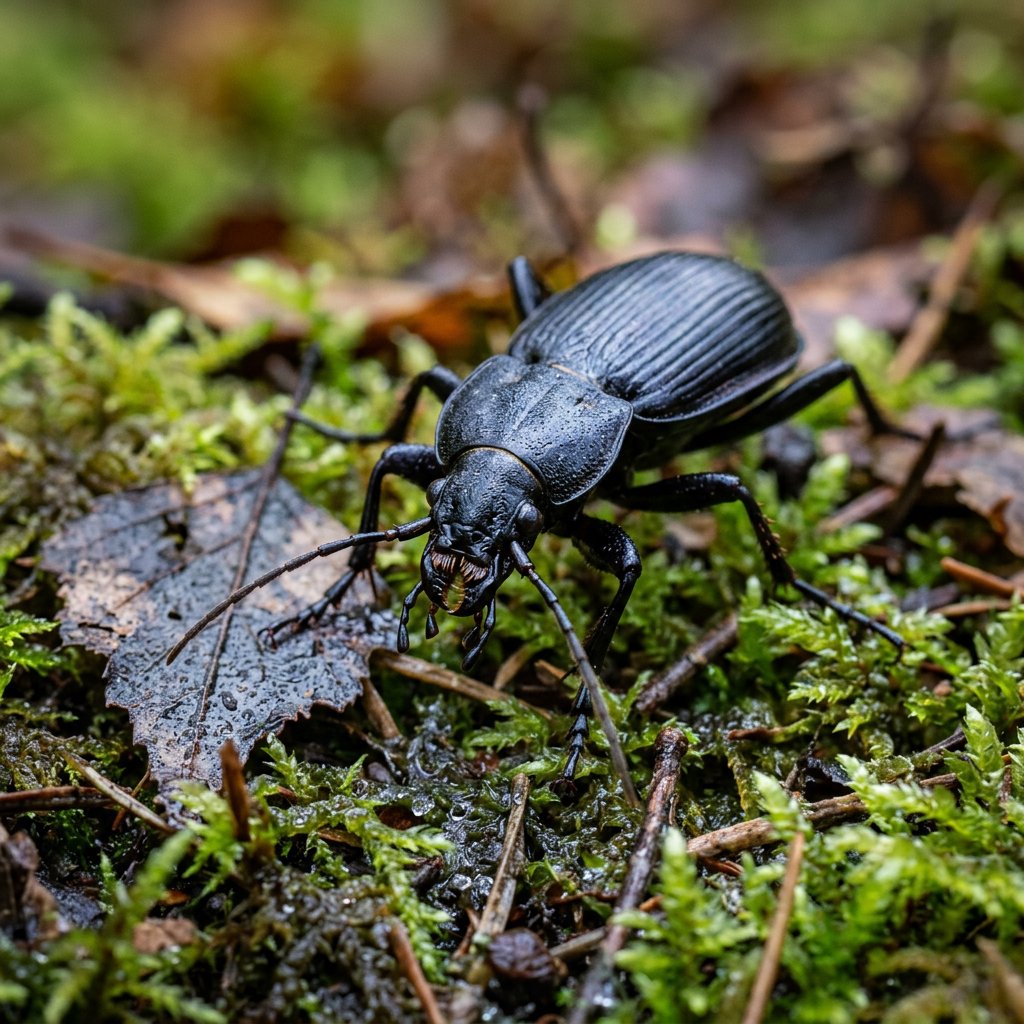
Known as the "Rain Beetle" or the "Garden Guardian," this sleek, obsidian-black insect is the ultimate midnight protector of your flowerbeds. While its large jaws might look intimidating, it is a tireless ally that hunts down the pests that eat your prize-winning hostas. Often found scurrying away when you flip over a garden stone, it is a sign of a healthy, balanced ecosystem.
🔍 How to Identify
- 🪲 Polished Armor: A solid, jet-black body with a glossy, metallic sheen that reflects light like polished coal.
- 📏 Grooved Shell: The elytra (hard wing covers) are marked with deep, parallel longitudinal lines, giving the beetle a distinctively "pinstriped" texture.
- 🦷 Strong Mandibles: It possesses prominent, pincer-like mouthparts designed specifically for grasping and crushing slippery prey.
🌲 Habitat & Ecology
- 🕵️ The Night Patrol: These beetles are strictly nocturnal. During the day, they retreat into "cool zones" under logs, stones, or mulch to prevent dehydration.
- 🍽️ Pest Control Expert: They are voracious generalist predators. A single beetle can devour dozens of garden slugs, snails, and fly larvae, acting as a natural alternative to chemical pesticides.
- 🍂 Soil Dweller: They prefer damp, undisturbed soil and are often used by scientists as "bioindicators" to measure the health and biodiversity of agricultural land.
⚠️ Safety & Toxicity
- 🛡️ Harmless Friend: This beetle is non-toxic and lacks a stinger. It poses no threat to humans, pets, or your plants.
- 🤏 Handle with Care: While not aggressive, if it is squeezed or trapped in a hand, it may deliver a tiny, harmless pinch with its mandibles. It may also release a pungent-smelling musk to discourage you from picking it up!
✨ Fun Fact
🦿 The Marathon Runner: While many beetles take to the air to find food, Pterostichus melanarius has largely traded flight for speed. Its powerful, muscular legs make it a formidable sprinter on the garden floor, allowing it to outrun most of its prey.
More Details








