Info
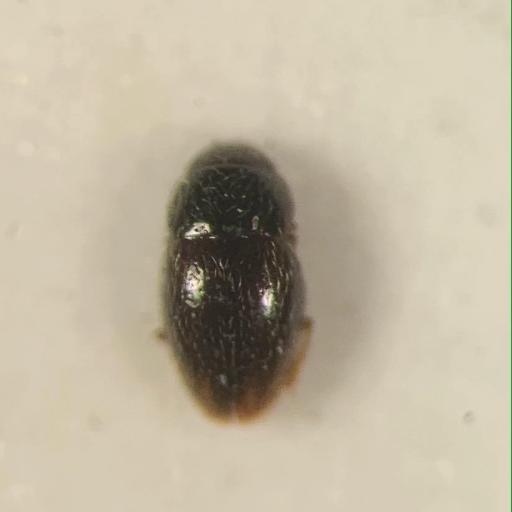
Meet the tiny record-holders of the insect world! Often called Featherwing Beetles, the members of the Ptiliidae family are so incredibly small that they are frequently mistaken for specks of dust or tiny mites. Despite their microscopic stature, they are complex living machines that play a vital role in breaking down organic matter in your backyard.
🔍 How to Identify
- 🪶 Feathered Wings: Their most iconic feature is their hindwings, which consist of a central stalk with long, delicate hairs, resembling a bird's feather or a fringed fan.
- 📏 Microscopic Size: Most species are less than 1 millimeter long. In fact, some are smaller than certain single-celled organisms!
- 🛡️ Body Shape: They typically have an oval or elongated body, often appearing shiny or covered in very fine, golden hairs under a microscope.
🌲 Habitat & Ecology
- 🍄 Fungal Feast: These beetles are specialized "fungivores." They spend their lives munching on fungal spores and hyphae found in damp environments.
- 🍂 Nature’s Recyclers: You will most likely find them in leaf litter, compost piles, rotting logs, or even inside animal nests. They thrive wherever moisture and decaying organic matter are present.
- 🌬️ Airborne Drifters: Because they are so light, they don't "fly" in the traditional sense; instead, they use their fringed wings to "row" through the air, often being carried long distances by even the slightest breeze.
⚠️ Safety & Toxicity
- ✅ Harmless Neighbor: Ptiliidae insects are completely harmless to humans, pets, and garden plants. They do not bite, sting, or carry diseases.
- 🛡️ Eco-Friendly: Because they eat fungi and help break down compost, they are actually beneficial "good guys" for your garden’s soil health.
✨ Fun Fact
The smallest species in this family, Scydosella musawasensis, holds the title for the world's smallest free-living insect, measuring only 0.325 millimeters—roughly the thickness of three sheets of paper!
More Details








