Info
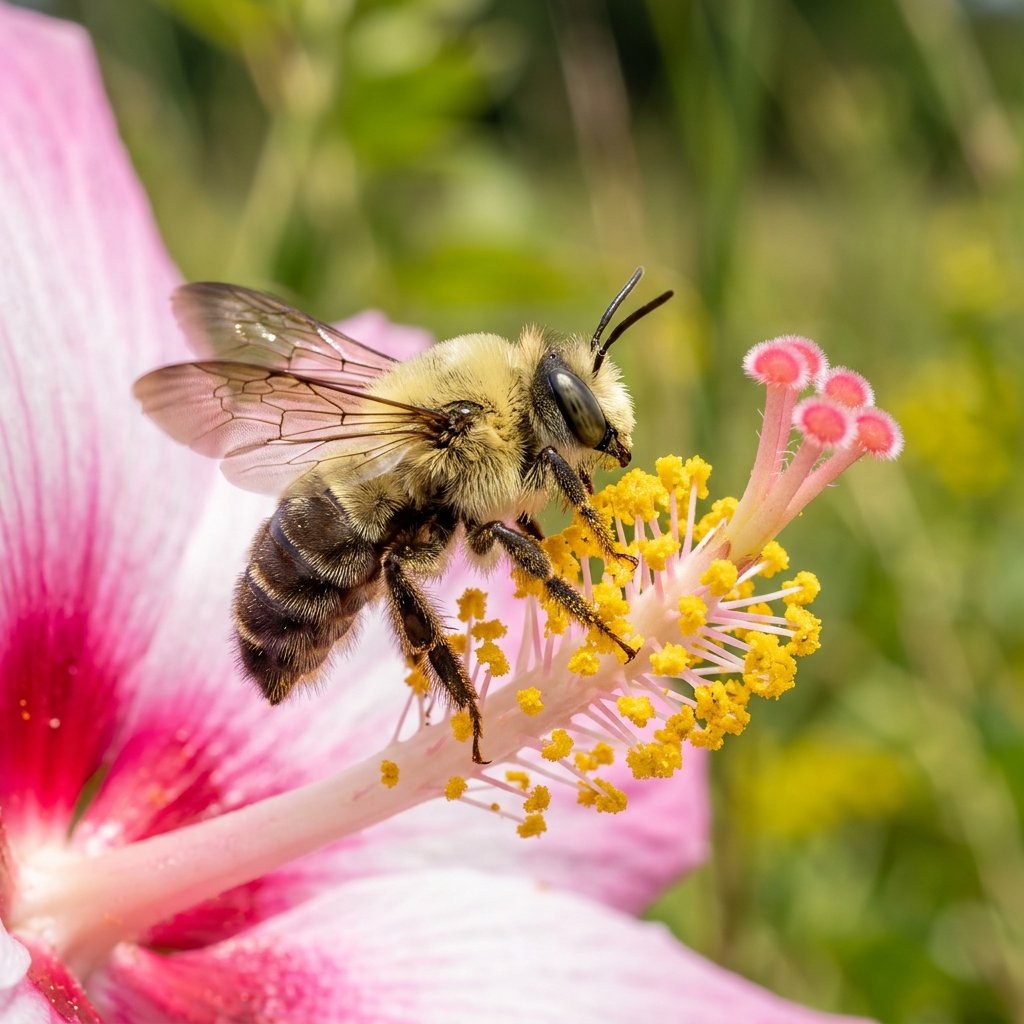
Commonly known as the Hibiscus Bee, this fuzzy flyer is a master of disguise, often mistaken for a common bumblebee. It is a specialist pollinator, timing its life cycle perfectly with the blooming of wild and garden Hibiscus plants. You’ll often find them buzzing purposefully through wetlands or summer gardens, performing a vital dance that keeps our native mallows thriving.
🔍 How to Identify
- 🐝 Bumblebee Mimic: They have a stout, hairy body with a golden-yellow or tan thorax and a predominantly black abdomen, mimicking the look of bumblebees to ward off predators.
- 👁️ Prominent Eyes: Their large, dark eyes are set on a wide face, giving them a very alert and focused appearance compared to other garden bees.
- 🦵 Pollen Chaps: Look at their hind legs; females have incredibly dense, specialized hairs (scopae) used for carrying large amounts of coarse hibiscus pollen, making them look like they are wearing furry leggings.
🌲 Habitat & Ecology
- 🌸 Specialist Diet: These bees are "oligolectic," meaning they are incredibly picky eaters. They almost exclusively visit flowers in the Malvaceae family, such as Rose Mallow and Hibiscus. If you plant these, you are likely to see them!
- 🕳️ Solitary Diggers: Unlike honeybees that live in hives, Hibiscus Bees are solitary. Females dig deep burrows in hard-packed soil, often near water sources, where they create waterproof chambers for their young.
- 💧 Water Lovers: They are unique for their ability to hover and "skim" over water surfaces. They use the moisture to soften the soil while excavating their nests or to help regulate the humidity for their larvae.
⚠️ Safety & Toxicity
- 🛡️ Gentle Temperament: Because they are solitary and have no hive to defend, Hibiscus Bees are extremely docile and non-aggressive. They are much more interested in flowers than humans.
- 🐶 Pet & Child Safe: They are safe to have around the garden. A sting is very unlikely unless the bee is physically crushed or stepped on. They pose no threat to curious pets.
✨ Fun Fact
- 🎓 The Mud Architect: Some Hibiscus Bees build elaborate "chimneys" or turrets out of mud at the entrance of their underground tunnels. These structures are thought to prevent the nest from flooding during heavy summer rains!
More Details








