Info
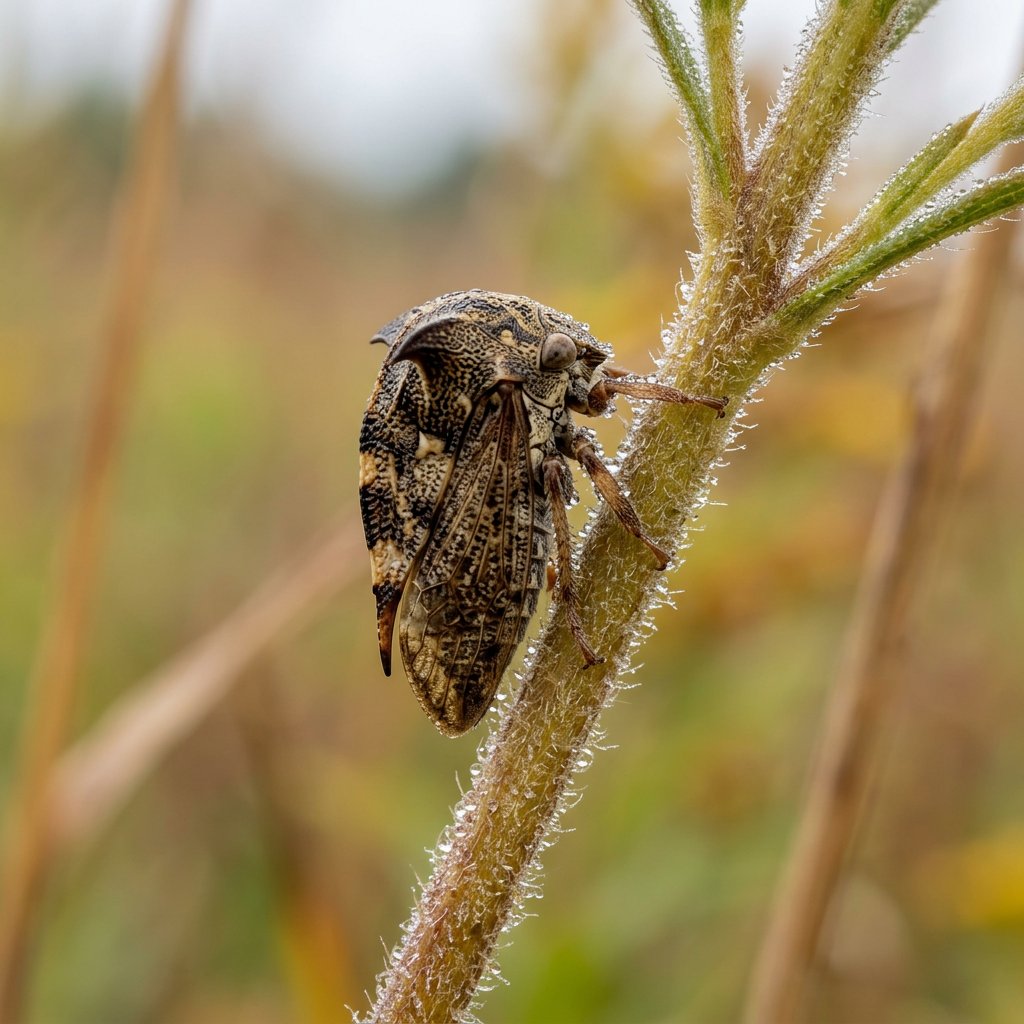
Often mistaken for a stray thorn or a jagged piece of bark, the Keeled Treehopper is one of nature’s most charming masters of disguise. These tiny, triangular insects are famous for their symbiotic "friendship" with ants, who act as their personal bodyguards in exchange for sweet treats. While their sharp-looking backs might seem intimidating, they are gentle sap-sippers that spend most of their lives tucked away on the stems of wildflowers.
🔍 How to Identify
- 🛡️ The "Keel": Their most striking feature is a high, arched ridge (pronotum) that runs along their back, resembling the keel of an overturned boat or a sharp plant thorn.
- 🎨 Mottled Coloring: They are typically a dark, earthy brown or grayish-black, often with subtle white or pale wavy markings that help them blend perfectly with plant stems.
- 📐 Triangular Shape: When viewed from above or the front, they have a distinct "wedge" or house-roof shape that masks their insectoid features from predators.
🌲 Habitat & Ecology
- 🌻 The Aster Connection: You’ll most likely find them huddled together on plants in the Aster family, such as Sunflowers, Goldenrods, and Ironweed, where they pierce the stems to drink nutrient-rich sap.
- 🐜 Ant Bodyguards: These treehoppers excrete a sugary liquid called "honeydew." Local ants love this snack so much that they will aggressively protect the treehoppers from ladybugs and spiders to keep the supply flowing.
- 🐣 Devoted Mothers: Unlike many insects that lay eggs and leave, Publilia concava females are known to stay with their eggs to guard them, sometimes even vibrating the plant to communicate with their young.
⚠️ Safety & Toxicity
- ✅ Status: Completely harmless to humans and pets.
- 🚫 No Bite or Sting: Despite their "armored" and prickly appearance, they have no stingers and their mouthparts are designed only for plants, not skin.
- 🌿 Garden Impact: While they do suck sap, they rarely cause significant damage to garden plants unless they appear in massive, uncontrolled numbers. They are generally considered a fascinating "neutral" resident of a healthy ecosystem.
✨ Fun Fact
Treehoppers are the "musicians" of the stem world! They communicate by vibrating their bodies to send signals through the plant itself. While we can’t hear them with our ears, to another treehopper, the plant stem is vibrating with songs about food, danger, and finding a mate.
More Details








