Info
Known as the "Meal Snout" or "Meal Moth," this small traveler is a common sight in kitchens and barns worldwide. While it doesn't bite or sting, it has a legendary reputation for being a tiny thief of flour, grains, and cereals. Despite its status as a pantry pest, its beautifully patterned wings make it look more like a piece of decorative tapestry than a common household intruder.
🔍 How to Identify
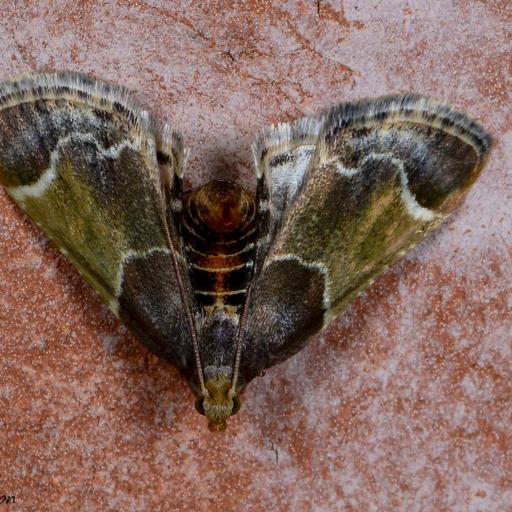
- 🦋 The "M" Pattern: When resting, the wings display a distinct "M" or "W" shape formed by wavy, dark brown bands bordered by white lines against a lighter cream or reddish-brown background.
- 👃 The Snout: It features prominent labial palps that point forward and upward, giving the insect the appearance of having a tiny, upturned nose or "snout."
- 📐 Triangular Silhouette: Unlike some moths that wrap their wings tightly around their bodies, the Meal Moth holds them out in a flat, broad triangle, often with the tip of its abdomen curved jauntily upward.
🌲 Habitat & Ecology
- 🥣 Pantry Predator: This moth is a scavenger, primarily seeking out damp or poorly stored cereals, flour, grain, and even hay. It thrives in humid environments where food has started to collect moisture or spoil slightly.
- 🧵 Silk Architects: The larvae (caterpillars) are famous for spinning long, sticky silken tubes within their food source. If you find "clumpy" flour or grains held together by fine, web-like threads, you have likely found a Meal Moth nursery.
⚠️ Safety & Toxicity
- ✅ Physical Safety: The Meal Moth is entirely harmless to humans and pets. It does not bite, sting, or carry diseases that directly affect human health.
- 🚫 Food Hygiene: While not toxic, they are a significant pest. Their presence in your pantry means the food is contaminated with silk, waste, and cast-off skins. For safety and quality, any infested food should be discarded and the storage area thoroughly cleaned.
✨ Fun Fact
✨ The Winged Handstand: When the Meal Moth is at rest, it often curls its abdomen over its back at a sharp angle. This unique posture makes the moth look like it is performing a tiny, winged handstand to camouflage itself among dried leaves or debris!
More Details








