Info
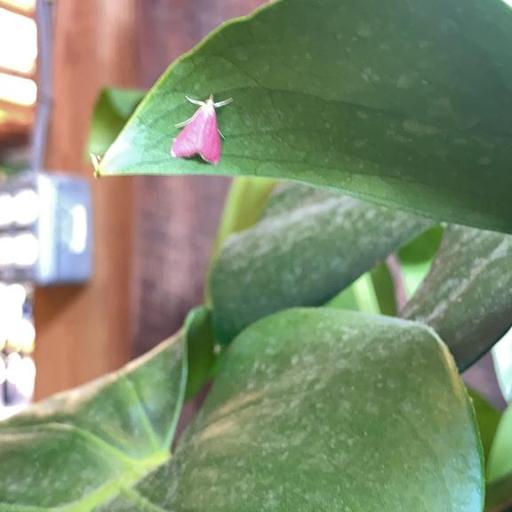
Dressed in vibrant shades of magenta and sunset pink, the Inornate Pyrausta is anything but "plain," despite what its scientific name suggests. Often called the Pink Salvia Moth, this tiny lepidopteran is a frequent visitor to gardens across the Southern United States and Mexico. While it looks like a delicate flower petal come to life, it is a specialized feeder that has a very specific relationship with your herb garden.
🔍 How to Identify
- 🎨 Vibrant Color: The most striking feature is its uniform deep pink or reddish-purple forewings, which sometimes sport a very faint yellowish tint at the edges.
- 📐 Triangular Shape: When at rest, it holds its wings in a neat, flat triangle, a classic trait of the Crambidae (Snout Moth) family.
- 🐛 The Larvae: Unlike the colorful adults, the caterpillars are translucent green with dark spots, often found hidden within silken webs on the plants they inhabit.
🌲 Habitat & Ecology
- 🌿 Salvia Specialists: These moths are "host-specific," meaning their life revolves around plants in the mint family, particularly Salvia (Sage). If you grow ornamental salvia, you are likely to see them fluttering nearby at dusk.
- 🕸️ Webbed Shelters: The larvae are clever architects; they spin fine silk to tie leaves together, creating a protective "tent" where they can munch on flower buds and foliage safely away from predators.
- 🌎 Southern Resident: They thrive in warm, subtropical climates and are most commonly spotted in regions ranging from California and Texas down through Florida and into the Caribbean.
⚠️ Safety & Toxicity
- ✅ Harmless: The Inornate Pyrausta is completely safe for humans and pets. They do not sting, bite, or possess any toxic defenses.
- 🥀 Garden Nuisance: While they aren't a threat to you, they are considered a minor "foe" for gardeners. A large population can quickly skeletonize the leaves of your favorite sage plants, making them look a bit ragged.
✨ Fun Fact
The genus name Pyrausta is derived from a Greek myth about a "fire-fly" that lived in the flames of a forge. While this moth doesn't live in fire, its glowing pink-red color makes it look like a tiny, wandering ember in the garden!
More Details








