Info
Commonly known as the Southern Purple Mint Moth, this tiny lepidopteran looks less like a common pest and more like a fragment of royal silk. With its vibrant regal palette, it is often mistaken for a small butterfly as it flits through herb gardens during the bright light of day. While many moths are creatures of the night, this species embraces the sun, dancing over mint and rosemary patches.
🔍 How to Identify
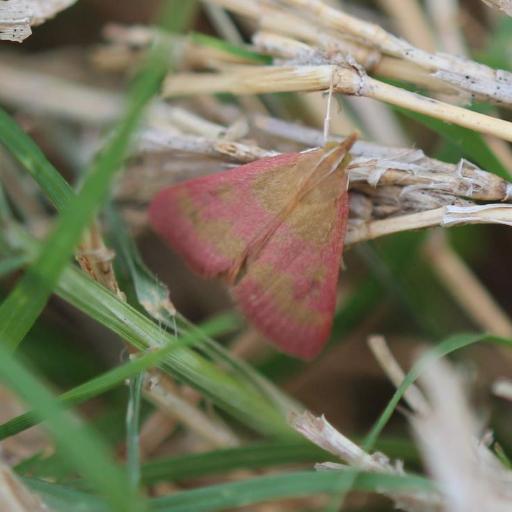
- 🎨 Color Palette: The forewings are a striking deep magenta or purplish-pink, decorated with bold, wavy bands of bright sulfur-yellow or gold.
- 📐 Wing Shape: When resting, it holds its wings in a neat, flat triangle, typical of the Crambid moth family.
- 📏 Size: It is quite petite, usually boasting a wingspan of only 17 to 20 millimeters, making it easy to miss if you aren't looking closely at the foliage.
🌲 Habitat & Ecology
- 🌿 The Mint Connection: As its name suggests, this moth is a specialist. Its larvae (caterpillars) feed almost exclusively on plants in the mint family (Lamiaceae), including wild horsemint, rosemary, and sage.
- ☀️ Daytime Wanderer: Unlike the "brown moths" that beat against your porch light, the Southern Purple Mint Moth is diurnal. You will most likely spot it in late spring through autumn, sunning itself on leaves or sipping nectar from small tubular flowers.
- 🦋 Garden Role: While the caterpillars may nibble on your herbs, the adults act as minor pollinators, moving from flower to flower in sunny, open meadows and backyard gardens.
⚠️ Safety & Toxicity
- ✅ Harmless: This moth is completely "friendly." It does not bite, sting, or possess any chemical defenses that irritate human skin.
- 🐾 Pet Safety: It is not known to be toxic to cats or dogs. However, if your pet is "hunting" them in the garden, be more mindful of the mint plants they might be trampling or eating, as some concentrated mint oils can upset a pet's stomach.
✨ Fun Fact
The species name laticlavia has a "royal" history. In Ancient Rome, a laticlavus was a broad purple stripe worn on the tunics of senators and high-ranking officials. This moth was named specifically for those bold, senator-like purple bands on its wings!
More Details








