Info
Often misunderstood because of its alarming name, the Rabid Wolf Spider is actually a beneficial garden protector rather than a threat. Known for its incredible speed and "wolf-like" hunting style, it stalks its prey across the forest floor rather than waiting in a web. In folklore and early naturalist circles, these agile sprinters were often described as "rabid" simply because of their erratic, lightning-fast movements and aggressive pouncing.
🔍 How to Identify
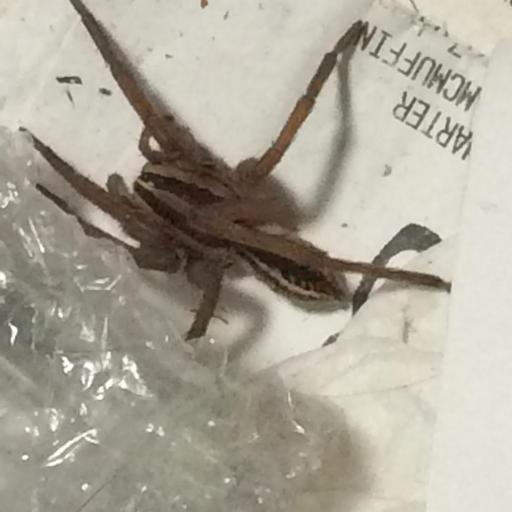
- 🕷️ Distinct Stripes: Two bold, dark longitudinal stripes run down the cephalothorax (the front body segment), while a single dark stripe centered on the abdomen is flanked by lighter spots.
- 👀 The Eyes: Like all wolf spiders, they have eight eyes arranged in three rows; the middle row features two very large, forward-facing eyes that provide excellent depth perception for hunting.
- 🦵 Athletic Build: They possess long, hairy legs designed for sprinting. In males, the first pair of legs is often noticeably darker or even black.
🌲 Habitat & Ecology
- 🦟 Natural Pest Control: These are elite predators of the undergrowth. They feast on crickets, grasshoppers, and even other spiders, making them an essential "friend" for maintaining a balanced ecosystem in your backyard.
- 🏡 Home & Hearth: While they prefer tall grasses, leaf litter, and woodpiles, they occasionally wander into basements or garages during the autumn. They do not spin webs to catch food, so you won't find them hanging from the ceiling.
⚠️ Safety & Toxicity
- 🚫 The Name Myth: Despite the terrifying name, these spiders cannot carry or transmit the rabies virus. They are generally shy and will almost always choose to sprint away from humans.
- 🩹 Biting Capability: A bite typically only occurs if the spider is squeezed or trapped against the skin. The venom is not medically significant for humans; for most, it results in minor localized pain, redness, or itching similar to a bee sting.
- 🐾 Pets: They are not considered dangerous to cats or dogs, though a curious pet might receive a defensive nip if they try to "play" with the spider.
✨ Fun Fact
- 🎒 Piggyback Rides: Female Rabid Wolf Spiders are dedicated mothers. After her spiderlings hatch, the mother carries the entire brood—sometimes hundreds of tiny spiders—on her back for several weeks, protecting them until they are ready to hunt on their own!
More Details








