Info
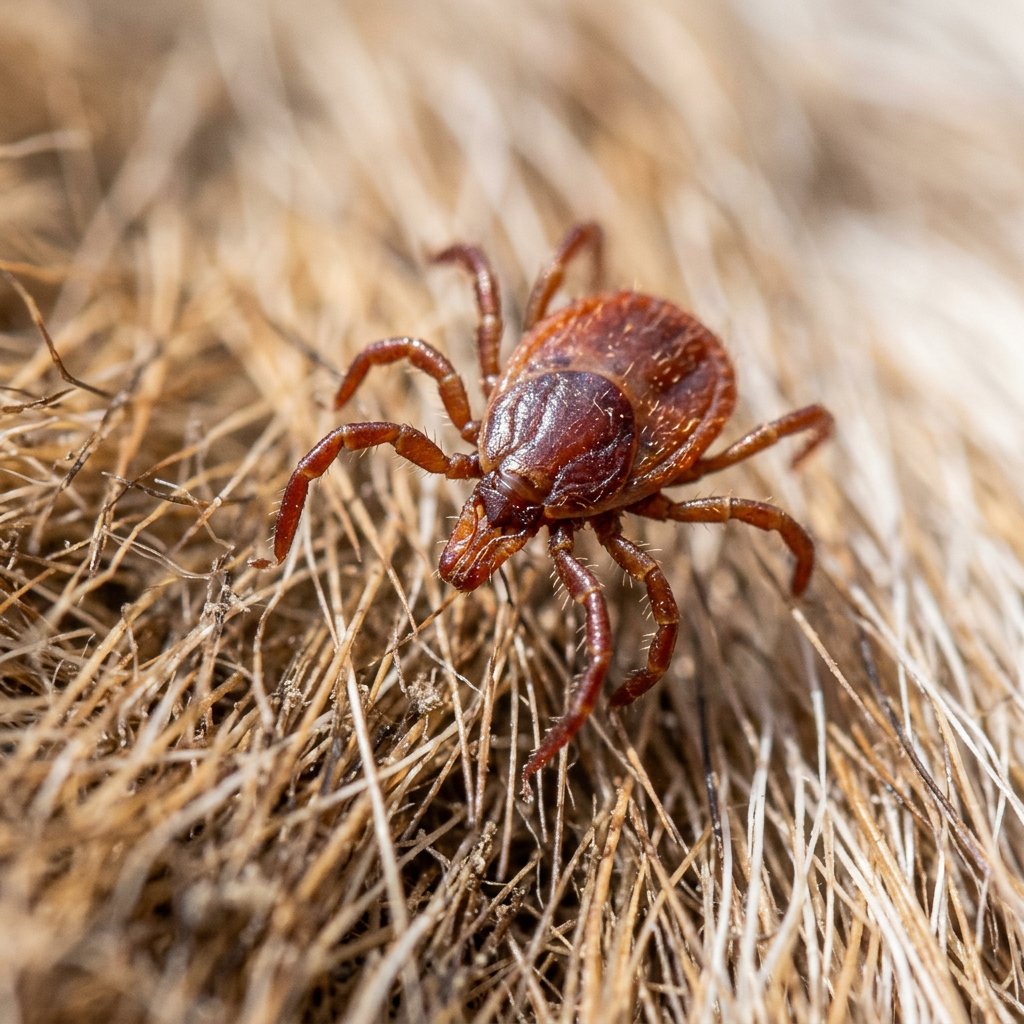
Commonly known as the Brown Dog Tick, this tiny hitchhiker is one of the most widespread ticks in the world. Unlike its forest-dwelling cousins that wait in tall grass, this species is a "homebody" that prefers the warmth of your living room or kennel over the deep woods. It is legendary among entomologists for its ability to complete its entire life cycle indoors, making it a persistent and tricky foe for pet owners.
🔍 How to Identify
- 🟤 Body Shape: It has a distinct, flattened, pear-shaped body that is reddish-brown in color. Unlike other common ticks, it lacks white or silvery "ornamental" markings on its back.
- 🦵 Leg Count: As an arachnid (not a true insect), the adult has eight legs, which are clustered toward the front of its body.
- 🎈 The "Grape" Look: When a female is fully engorged after a meal, her body stretches and changes color to a gray-blue or olive hue, looking like a small, shiny pebble.
🌲 Habitat & Ecology
- 🏠 Indoor Specialist: This is the only tick species in North America that can infest a home. It hides in cracks, crevices, behind baseboards, and even in the folds of curtains while it waits to feed.
- 🐕 Host Preference: While its name suggests a strict diet of dogs, it is an opportunist. If a canine isn't available, it will readily attach to other mammals, including humans and cats.
- ⏳ Survivalist Instincts: They are incredibly hardy; an adult Brown Dog Tick can survive for over 200 days without a single drop of blood, lurking in the shadows of a house.
⚠️ Safety & Toxicity
- 🚫 Disease Vector: While they do not have venom, they are dangerous because they carry pathogens. They are primary spreaders of Rocky Mountain Spotted Fever (RMSF) in humans and several serious blood diseases in dogs.
- 🐕 Pet Health: Heavy infestations can cause "tick paralysis" or severe anemia in pets. Check your dog’s ears, neck, and between their toes regularly.
- 👤 Human Risk: If you find one attached to yourself, use tweezers to grasp it as close to the skin as possible and pull upward with steady, even pressure. Do not twist, as the mouthparts can break off in the skin.
✨ Fun Fact
- 🧗 High-Altitude Hiding: Brown Dog Ticks have a biological urge to climb upward after feeding. In infested homes, they are often found hiding in the trim where the wall meets the ceiling, waiting to drop down or crawl toward a sleeping host!
More Details








