Info
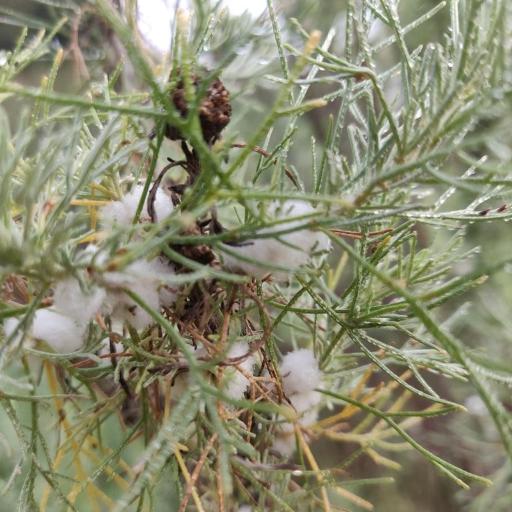
Often called the Woolly Gall Midge, Rhopalomyia floccosa is a tiny architect of the scrublands and high deserts. If you’ve ever spotted what looks like a stray tuft of sheep's wool or a tiny cotton ball snagged on a desert shrub, you’ve likely found the cozy nursery of this insect. It is a master of biological trickery, convincing its host plant to build a fuzzy fortress for its young.
🔍 How to Identify
- ☁️ The Gall: The most obvious sign is a white, cottony, or woolly mass (the gall) usually found on the stems or leaf axils of Rabbitbrush.
- 🦟 The Adult: The actual insect is a delicate, mosquito-like fly, often less than 3mm long with fragile wings and long, slender legs.
- 🏠 The Inner Chamber: Inside the white fluff is a firm, green or brown core containing small chambers where the tiny orange larvae live and feed.
🌲 Habitat & Ecology
- 🌿 Host Specificity: These midges are highly picky; they are almost exclusively found on Ericameria species (like Rubber Rabbitbrush) and occasionally Sagebrush.
- 🧪 Plant Manipulation: This insect doesn't "build" the woolly home; instead, it injects special chemicals into the plant when laying eggs, forcing the plant to grow these protective fibers to shield the larvae from predators and the sun.
- 🏜️ High Desert Resident: They are most common in the Western United States, thriving in arid environments where their host plants dominate the landscape.
⚠️ Safety & Toxicity
- ✅ Completely Harmless: The Woolly Gall Midge does not bite, sting, or carry diseases. They are a natural part of the ecosystem and pose no threat to humans or pets.
- 🌱 Plant Impact: While the galls might look like a "disease" or a pest infestation, they are generally cosmetic and rarely cause significant harm to the host plant’s long-term health.
✨ Fun Fact
The thick, white "wool" of the gall acts as a high-tech insulator. It reflects intense UV rays during the day and traps heat at night, keeping the developing larvae at a perfect temperature while the desert environment fluctuates wildly around them.
More Details








