Info
Known as the "silent assassin" of the palm world, the Red Palm Weevil is a formidable traveler with a striking appearance. While it looks like a miniature crimson tank, its beauty hides a destructive secret that has reshaped landscapes from Southeast Asia to the Mediterranean. It is famous—or perhaps infamous—for being the world’s most dangerous pest to palm trees.
🔍 How to Identify
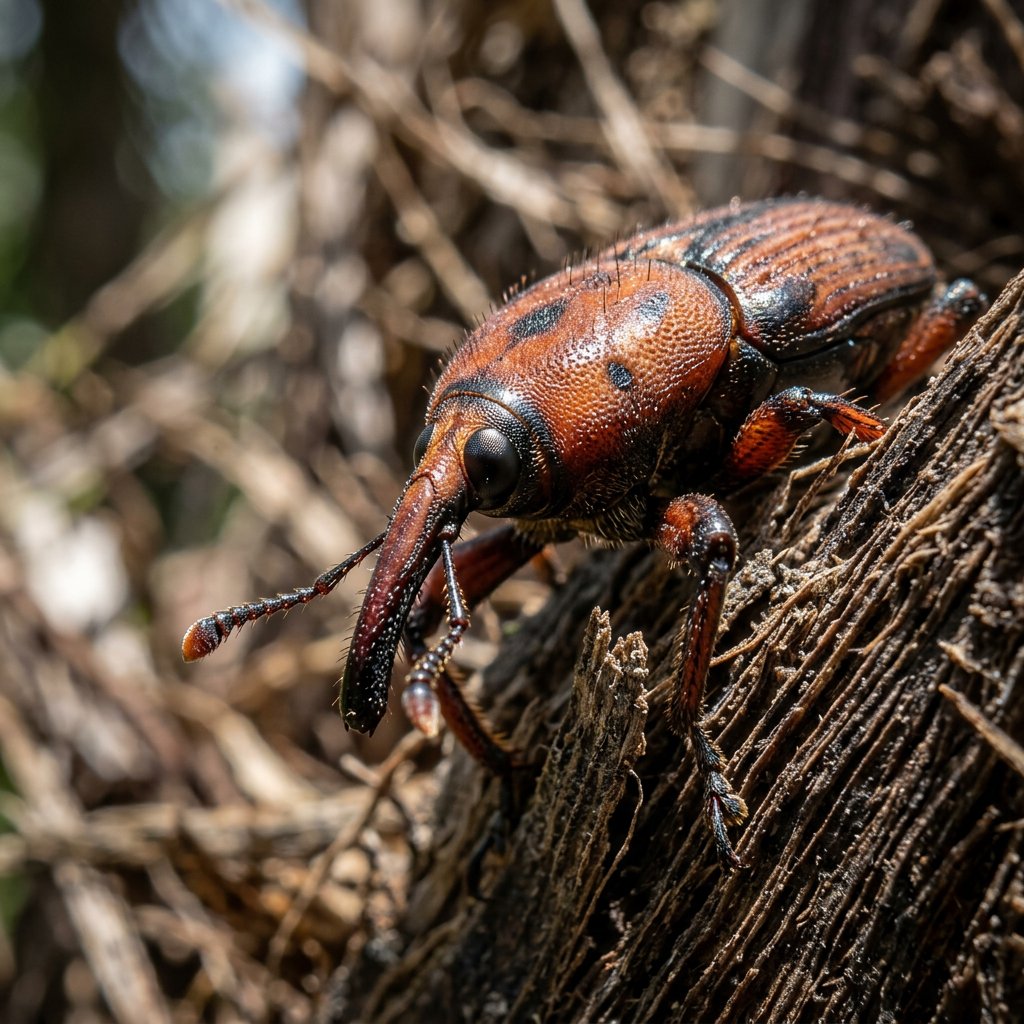
- 🎨 The Snout: It features a long, curved "rostrum" or snout typical of weevils, which it uses to bore into plant tissue for feeding and egg-laying.
- 🔴 Coloration: Its body is a deep rusty red to brownish-orange, usually decorated with several small, distinct black spots on the upper part of its thorax.
- 🛡️ Size and Shape: A large, robust beetle reaching up to 4 centimeters in length, it has hard, grooved wing covers (elytra) that give it a sturdy, armored look.
🌲 Habitat & Ecology
- 🌴 The Palm Specialist: This insect is a specialist that targets over 40 species of palms, including Coconut, Date, and Canary Island Date palms. It is especially attracted to trees that have been recently pruned or damaged.
- 🏚️ The Hidden Destroyer: Most of its life is spent hidden inside the tree. The adult weevil lays eggs in the trunk, and the resulting larvae (large, legless cream grubs) tunnel through the "heart" of the palm, eventually causing the entire crown to collapse and the tree to die.
⚠️ Safety & Toxicity
- ✅ Human Safety: The Red Palm Weevil is entirely harmless to humans and pets. It does not bite, sting, or carry any diseases that affect mammals.
- 🚨 Plant Alert: While safe for you, it is a "red alert" for your garden. If you see one, your palm trees may be in immediate danger. Because they are a high-risk invasive species in many regions, sightings should often be reported to local agricultural or environmental authorities.
✨ Fun Fact
🐛 A Creepy-Crawly Delicacy: While gardeners fear them, the larvae of this weevil (often called Sago worms) are considered a prized delicacy in parts of Southeast Asia. They are said to have a creamy, buttery flavor and are often eaten fried or even raw as a high-protein snack!
More Details








