Info
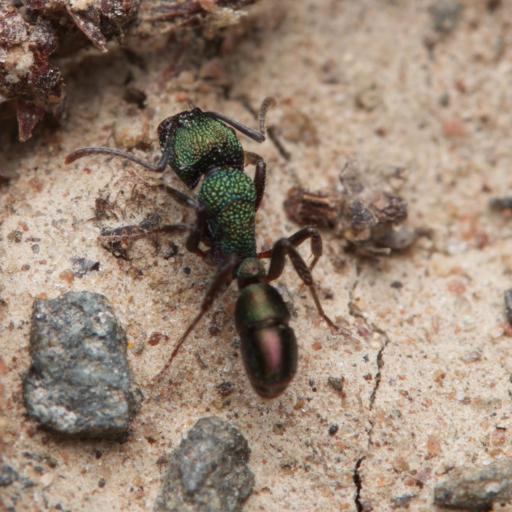
Known famously as the Green Headed Ant or the "Metallic Pony Ant," this shimmering insect is one of Australia’s most iconic backyard residents. While they look like tiny, walking gemstones, they are hardy survivors known for their distinctive iridescent armor that shifts from emerald green to violet in the sunlight. In local folklore, they are often the first "sting" a child experiences while playing barefoot in the grass, serving as a rite of passage in the Australian bush.
🔍 How to Identify
- 🌈 Iridescent Sheen: The most striking feature is the metallic exoskeleton. While usually a brilliant green, the color can appear purple, blue, or even bronze depending on the angle of the light.
- 🐜 Sculptured Body: If you look closely, their bodies aren't smooth; they have a deeply "pitted" or rugose texture that looks like finely carved stone.
- 📐 Compact Size: These ants are relatively small, typically measuring between 5mm and 7mm in length, with a sturdy, robust build compared to more slender ant species.
🌲 Habitat & Ecology
- 🏡 Garden Residents: They are incredibly common in urban lawns, gardens, and open woodlands. They prefer nesting in the soil, often tucking their colonies under large rocks, logs, or garden paving stones.
- 🐝 Solitary Foragers: Unlike some ants that move in massive, synchronized trails, Green Headed Ants are often seen hunting or scavenging alone, moving with a jerky, deliberate pace.
- ♻️ Ecosystem Engineers: They are vital for the environment because they practice "myrmecochory"—they collect seeds and carry them to their nests, effectively acting as tiny gardeners that help native plants disperse and grow.
⚠️ Safety & Toxicity
- 🦂 The Sting: While they don't have powerful jaws for biting, they do possess a potent stinger at the tip of their abdomen.
- 🚫 Pain Profile: A sting is immediate and sharp, often described as a "burning prickle" that can last for several minutes. While painful, it is generally not dangerous to humans unless an individual has a rare, specific allergy to ant venom.
- 🐾 Pets & Kids: Keep an eye on curious dogs or barefoot toddlers. These ants aren't aggressive, but they will sting if stepped on or if their nest entrance is disturbed.
✨ Fun Fact
These ants have a very sophisticated "chemical pharmacy" inside their bodies! They produce powerful antimicrobial secretions that prevent fungi and bacteria from growing in their underground tunnels, a trait scientists have studied for potential use in human medicine.
More Details








