Info
Meet the Vedalia Beetle, the tiny red-and-black savior of the citrus world. Often called the "Cardinal Ladybird," this Australian native is a legendary figure in the history of organic gardening. It is most famous for its role as a "biological mercenary," having been recruited in the late 1800s to save California’s dying orange groves from a devastating scale infestation.
🔍 How to Identify
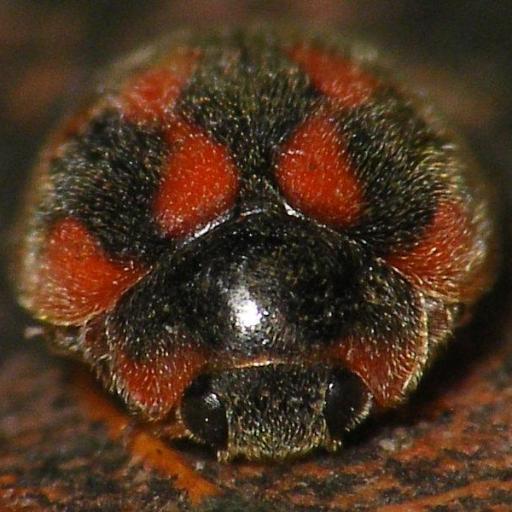
- 🐞 The Shell: Look for a small, dome-shaped body covered in fine, velvety hairs. Unlike the glossy finish of a common ladybug, these have a softer, matte appearance.
- 🎨 Cardinal Colors: They feature a striking pattern of irregular black splotches against a deep, "cardinal" red background. No two beetles have the exact same markings.
- 📏 The Larvae: Keep an eye out for their young; the larvae are reddish-grey with dark spots and look like tiny, bumpy "alligators" crawling along citrus branches.
🌲 Habitat & Ecology
- 🍴 The Specialist Diet: This beetle is a picky eater with a hero’s appetite. It feeds exclusively on the Cottony Cushion Scale, an invasive pest that sucks the sap out of trees. Without this beetle, many citrus orchards would simply cease to exist.
- 🏡 Where to Find Them: You will almost always find them where their prey lives—on the stems and leaves of citrus trees, pittosporum, and occasionally acacia. They prefer sunny, warm environments where scale insects thrive.
⚠️ Safety & Toxicity
- ✅ Friend to Humans: The Vedalia Beetle is 100% harmless to humans. They do not sting, and they lack the strong "reflex bleeding" (the yellow, smelly liquid) that some other ladybug species use to deter predators.
- 🐶 Pet Safe: They are non-toxic to cats and dogs. In fact, having them in your garden is a sign of a healthy, chemical-free ecosystem.
- 🚫 A Threat Only to Pests: While they are fierce predators in the insect world, their mandibles are far too small to bite human skin.
✨ Fun Fact
The Vedalia Beetle was the star of the first-ever successful biological pest control project in history! In 1888, just 514 of these beetles were brought from Australia to California; within a few years, they had multiplied and completely wiped out the scale insects that were threatening to destroy the state's entire citrus industry.
More Details








