Info
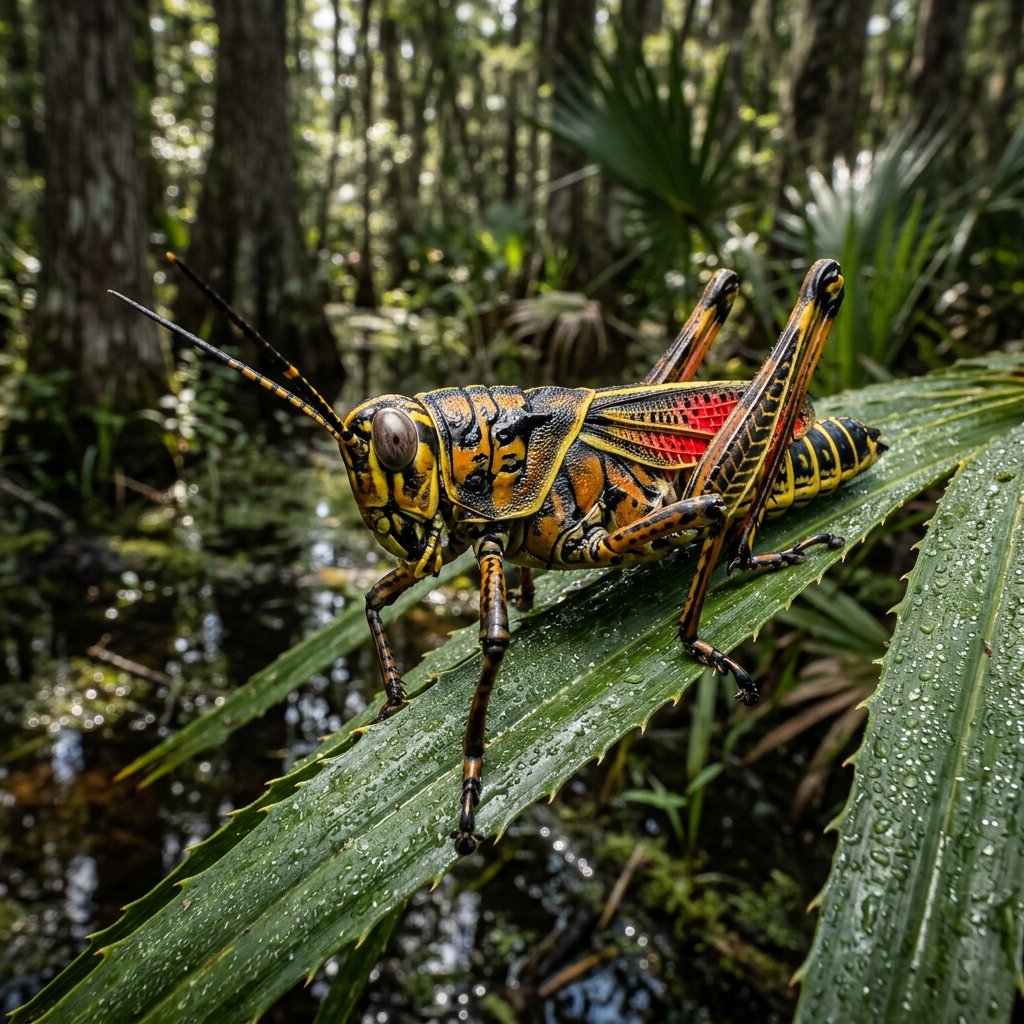
While you might find it munching on your favorite garden greenery, Romalea microptera is actually the Eastern Lubber Grasshopper, not a plant. Known as the "gentle giant" of the insect world, its name "Lubber" comes from an old English word for "clumsy" or "lazy"—a perfect description for this slow-moving, flightless behemoth that relies on its armor and toxicity rather than speed.
🔍 How to Identify
- 🪽 Short Wings: Unlike most grasshoppers, their wings are tiny (vestigial) and rose-pink, making them completely incapable of flight.
- 🎨 Warning Colors: Adults are usually a striking bright yellow or orange with black spots and markings, though some "dark morphs" appear almost entirely black with yellow outlines.
- 📏 Impressive Scale: They are one of the largest grasshoppers in North America, often reaching nearly 3 inches (8 cm) in length with a very thick, heavy body.
🌲 Habitat & Ecology
- 🍽️ Garden Diet: They are notorious "generalist" herbivores. While they eat many things, they have a particular love for Amaryllis, Crinum lilies, and citrus leaves, often leaving jagged edges on foliage.
- 🛡️ Natural Defense: Because they cannot fly away from predators, they have evolved a chemical defense system. When poked, they produce a loud hissing sound and spray a bitter, frothy liquid from their thorax.
⚠️ Safety & Toxicity
- 🧪 Toxic to Predators: They are biologically toxic. The bright colors serve as a warning to birds and small mammals that eating this grasshopper will result in sickness or even death.
- 🐶 Pet Safety: Keep curious dogs and cats away. If a pet swallows one, it can cause severe gastrointestinal distress or vomiting. The "tobacco spit" they secrete can also irritate a human's eyes or skin.
✨ Fun Fact
The Eastern Lubber Grasshopper is so well-defended that it has almost no natural predators. However, the Loggerhead Shrike (a bird known as the "Butcherbird") has figured out a workaround: it impales the grasshopper on a thorn or barbed wire and leaves it to bake in the sun for several days, which allows the internal toxins to degrade before the bird eats it!
More Details








