Info
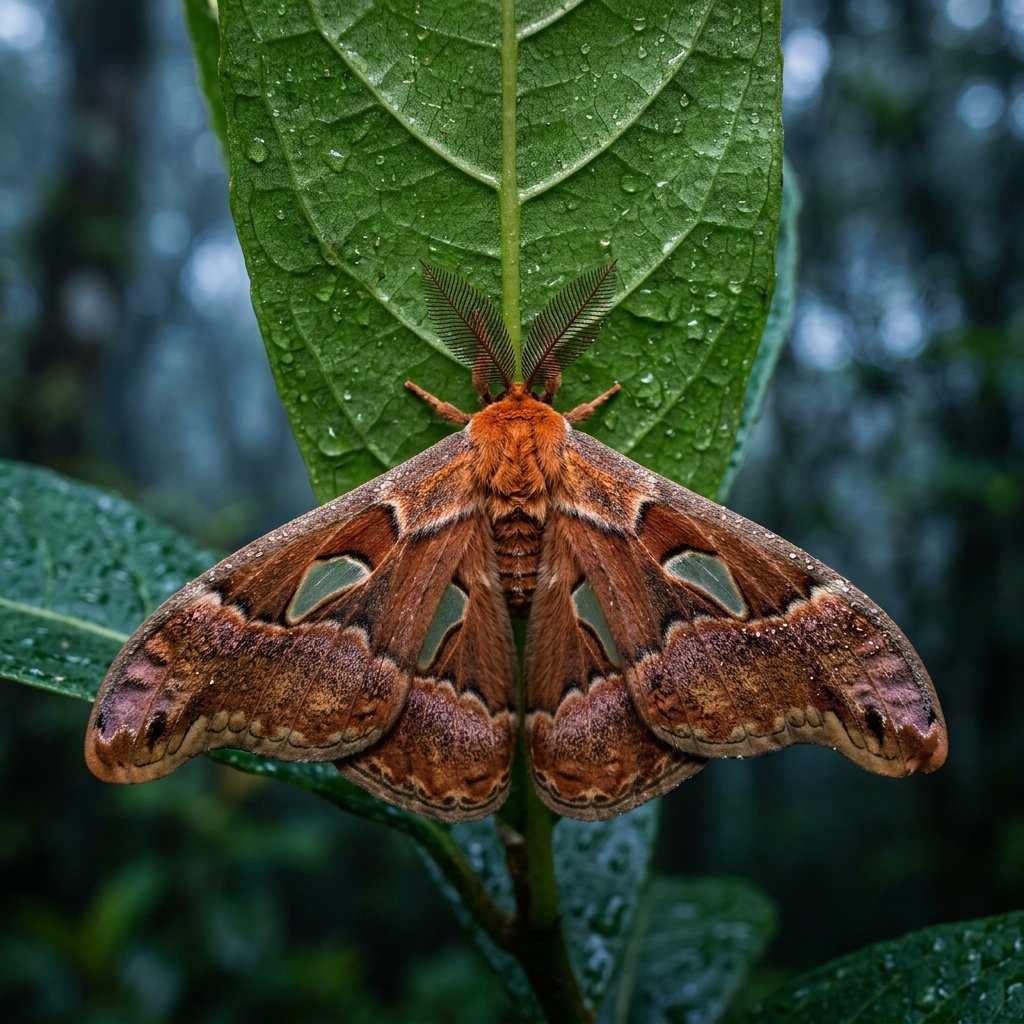
Often called the Wang’s Silk Moth, this breathtaking insect is a true crown jewel of the Asian forests. Belonging to the Saturniidae family—the giant silk moths—it is famous for its massive, velvet-like wings and intricate "window" markings. These moths are like living tapestries, often appearing as a surprise guest near porch lights or deep in wooded gardens.
🔍 How to Identify
- 🦋 Crescent Windows: Each of the four wings features a distinct, translucent white "window" or crescent moon shape outlined in black and yellow.
- 🎨 Earth-Tone Palette: The wings are draped in rich shades of mahogany, cinnamon, and olive-green, allowing them to mimic dead leaves when resting.
- 🧸 Woolly Body: Like many silk moths, they have thick, furry bodies and feathered antennae that look like tiny, delicate combs.
🌲 Habitat & Ecology
- 🍃 A Specialized Diet: As caterpillars, they are voracious eaters, favoring the leaves of trees like the Tree of Heaven (Ailanthus) and various privet species.
- 🌙 The Short-Lived Adult: In a bittersweet twist of nature, the adult moth has no mouth and cannot eat. Its entire adult life—usually only 7 to 10 days—is dedicated solely to finding a mate and laying eggs.
- 🗺️ Forest Dwellers: Native to the subtropical forests of Southeast Asia and China, they prefer humid environments where their host plants are abundant.
⚠️ Safety & Toxicity
- 🛡️ Harmless Giant: The Samia Wangi is completely harmless to humans. They do not bite, sting, or possess any chemical irritants.
- 🐾 Pet & Child Friendly: Because they lack mouthparts and stingers, they are safe to observe closely. However, their wings are very fragile; touching them can rub off the tiny scales they need for flight.
✨ Fun Fact
The Samia moths are cousins to the famous Attacus atlas (Atlas Moth). While they are slightly smaller, they are prized by "sericulturists" (silk farmers) because they produce a durable, cinnamon-colored silk known as Eri silk, which is harvested without harming the moth inside the cocoon!
More Details








