Info
Known as the Asian Mud Dauber, this elegant insect is the master architect of the wasp world. Originally hailing from Asia but now a common sight across Europe, it is often seen hovering near puddles to collect building materials. Unlike their social cousins who build paper hives, these solitary wasps are "lone wolves" that spend their days crafting intricate clay pottery for their offspring.
🔍 How to Identify
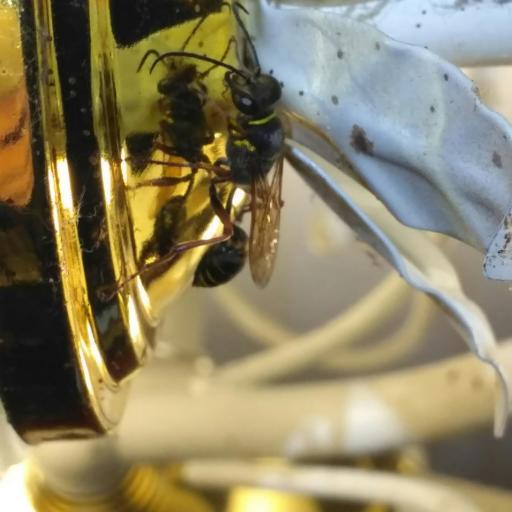
- 🐝 The "Wasp Waist": It features an incredibly long, thin, and slightly curved thread-like waist (petiole) that connects its thorax to its abdomen.
- 🎨 Color Patterns: Its body is a mix of reddish-brown and black, accented with distinct yellow or orange bands on its legs and torso.
- ✈️ Dangling Legs: When in flight, its long, spindly legs hang down prominently, making it look much larger and more cumbersome than it actually is.
🌲 Habitat & Ecology
- 🏺 Mud Masonry: You will likely find their "urns" before you see the wasp itself. They build rows of small, cigar-shaped mud cells in sheltered areas like attics, window frames, or behind shutters.
- 🕷️ The Spider Hunter: These wasps are beneficial garden helpers! A single female will catch and paralyze dozens of small spiders, stuffing them into her mud cells to provide a fresh, "living" feast for her larvae once they hatch.
- 🏡 Urban Adaptation: They have a peculiar habit of moving indoors. It is not uncommon to find their mud nests tucked away behind a bookshelf or inside the folds of a heavy curtain.
⚠️ Safety & Toxicity
- 🛡️ Non-Aggressive: Despite their intimidating "scary wasp" appearance, they are very docile. Because they have no colony or queen to defend, they almost never sting humans unless they are physically grabbed or crushed.
- 🩹 Mild Sting: If you are unfortunate enough to be stung, the pain is generally very mild—much less intense than a honeybee or a yellowjacket—and typically results in only minor redness.
✨ Fun Fact
The Sceliphron curvatum is a true world traveler; it is believed to have spread across Europe by hitchhiking on cargo ships and international transport, quickly becoming one of the most successful invasive wasp species due to its love for man-made structures.
More Details








