Info
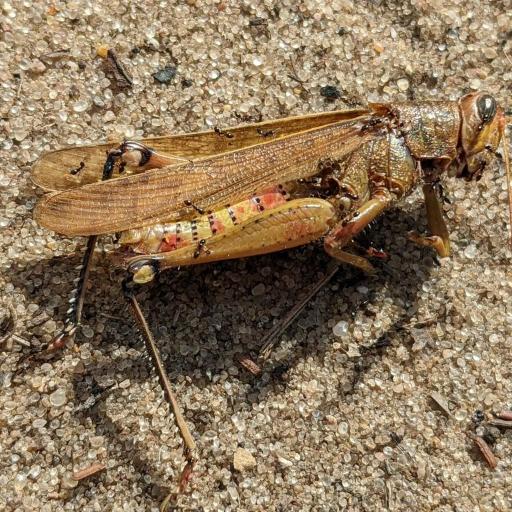
Known as the Spotted Bird Grasshopper, this impressive insect is the "heavyweight champion" of the North American prairie. It gets its nickname from its powerful, bird-like flight and its tendency to perch high in trees or shrubs rather than staying on the ground. While its sudden, loud take-off might startle you, it is a fascinating example of nature’s camouflage and athleticism.
🔍 How to Identify
- 📏 Impressive Scale: This is one of the largest grasshoppers in North America; females are particularly massive, often reaching nearly 3 inches (70mm) in length.
- 🟡 The Racing Stripe: Look for a distinct, creamy-yellow or pale line running down the center of the head and the back (pronotum).
- 🪶 Spotted Wings: Its forewings are typically tinted with brownish or purplish hues and covered in dark, smoky spots, which helps it disappear against dried leaves and bark.
🌲 Habitat & Ecology
- 🍽️ A Selective Eater: While many grasshoppers eat anything green, the Spotted Bird Grasshopper is a bit of a connoisseur. It has a famous fondness for Sumac (Rhus) and Leadplant, though it will happily snack on various garden ornamentals.
- 🪁 Master of Flight: Unlike smaller grasshoppers that simply "hop" and land, this species can fly long distances with a loud fluttering sound. Because of their size and height, they are frequently mistaken for small birds when they take wing.
⚠️ Safety & Toxicity
- 🛡️ Gentle Giant: They are completely harmless to humans. They do not sting, and while they have strong mandibles for chewing leaves, they are not aggressive and will not bite unless pinched or handled roughly.
- 🧪 The "Tobacco Spit": If picked up, it may regurgitate a dark brown liquid. This is a harmless defense mechanism intended to gross out predators, not a toxin.
- 🐶 Pet Friendly: They are non-toxic to cats and dogs. However, their thick, "crunchy" exoskeleton can sometimes cause mild indigestion if a curious pet decides to swallow one whole.
✨ Fun Fact
The Spotted Bird Grasshopper is a master of "dietary camouflage." Depending on the specific plants available in its environment, its color can shift between vibrant leaf-green and dusty brownish-yellow to ensure it remains invisible to hungry birds!
More Details








