Info
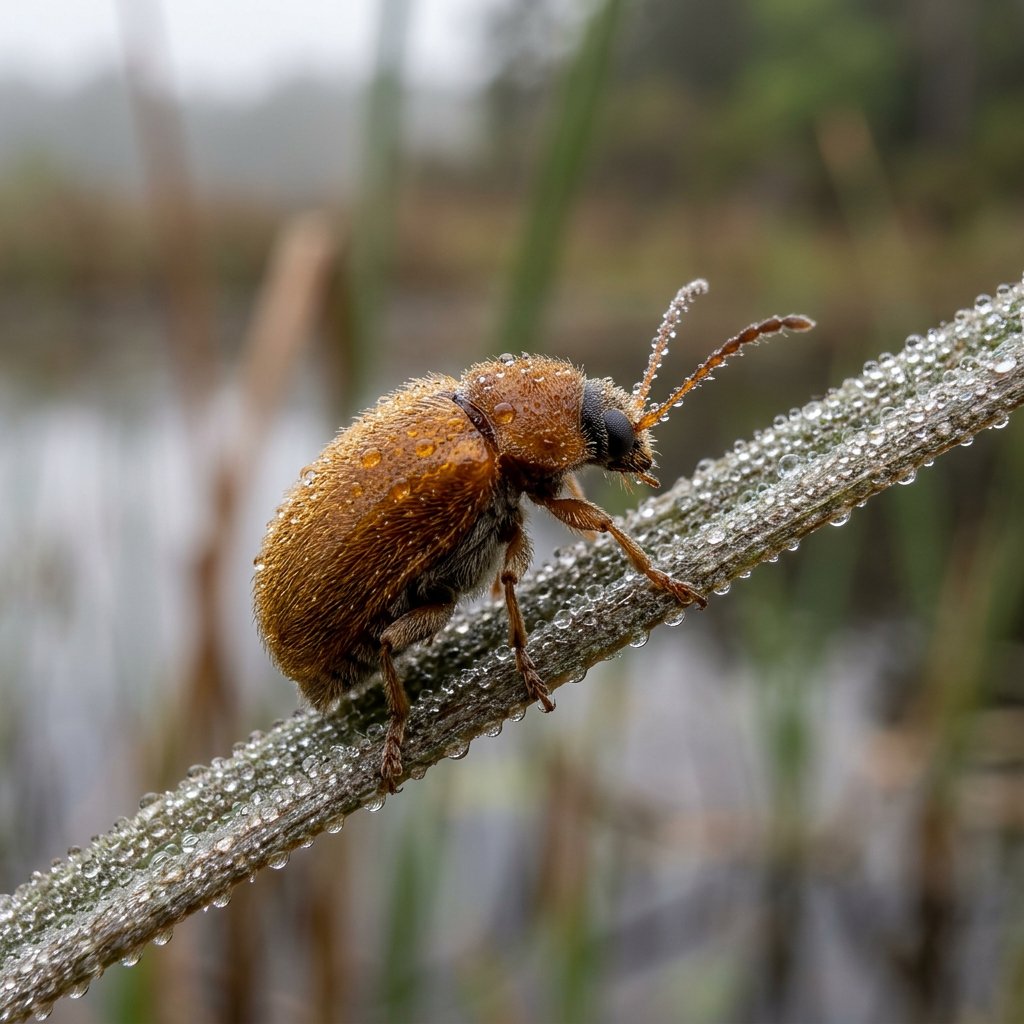
Often called "Marsh Beetles," members of the Scirtes genus are the hidden acrobats of the wetland world. While they might look like ordinary, tiny brown beetles at first glance, they possess a surprising "superpower" hidden in their hind legs that allows them to catapult away from danger in the blink of an eye. You’ll usually find these moisture-loving insects resting on reeds, lily pads, or floating vegetation near ponds and marshes.
🔍 How to Identify
- 🦘 Jumping Legs: Their most distinctive feature is their greatly enlarged hind thighs (femurs), which are thick and muscular, much like those of a grasshopper or a flea beetle.
- 🍳 Body Shape: They have a small, broadly oval, and somewhat flattened body, often measuring only 2–4 millimeters in length.
- 🟤 Subtle Coloring: Most species are colored in shades of tan, dull orange, or dark brown, helping them blend perfectly into dried leaves and muddy banks.
🌲 Habitat & Ecology
- 💧 Wetland Specialists: These beetles are rarely found far from water. They thrive in "riparian zones"—the lush green areas where land meets ponds, streams, or swamps.
- 🌱 Aquatic Beginnings: Interestingly, the larvae of Scirtes are completely aquatic. They live underwater among submerged plants, using long, multi-segmented antennae to feel their way through the murky depths while feeding on decaying organic matter.
- 🌼 Pollination Partners: As adults, they often venture onto nearby flowers to feed on pollen and nectar, playing a small but helpful role in the local ecosystem's pollination cycle.
⚠️ Safety & Toxicity
- ✅ Harmless: Scirtes beetles are entirely safe for humans, children, and pets. They do not bite, sting, or carry diseases.
- 🛡️ Non-Invasive: They are not considered garden pests. Because they require very specific damp conditions to breed, they will not infest your home or damage your dry-land ornamental plants.
✨ Fun Fact
Despite being beetles, Scirtes are famous for their "flea-like" jumping ability. When startled, they use a specialized internal spring mechanism in their legs to launch themselves into the air, often disappearing from a predator's sight before it can even strike!
More Details








