Info
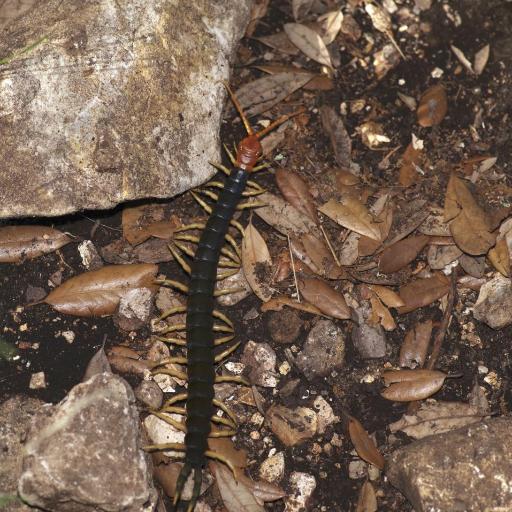
The Giant Desert Centipede, often called the "Texas Redheaded Centipede," is the stuff of desert legends. Growing up to 8 inches long, this armored titan is the largest centipede in North America. While its many-legged silhouette might send a shiver down your spine, it is a fascinating apex predator of the undergrowth, perfectly adapted to the rugged landscapes of the American Southwest.
🔍 How to Identify
- 📏 Size Matters: One of the easiest ways to identify it is its sheer scale; adults consistently reach lengths of 6.5 to 8 inches.
- 🎨 High-Contrast Colors: They typically sport a vibrant yellow or orange body, a dark "ink-black" tail end, and a strikingly bright red head.
- 🏃 Leg Count: Despite the name "centipede," this species specifically has 21 pairs of yellow legs that allow it to scurry across rocky terrain with surprising speed.
- ⚔️ Pincers: Look for the "forcipules" near the head—these are actually modified legs that act like venomous fangs to submerge into prey.
🌲 Habitat & Ecology
- 🏜️ Arid Living: They thrive in rocky, dry environments but are masters of moisture conservation, often hiding under flat stones, logs, or in abandoned burrows during the heat of the day.
- 🦗 The Ultimate Hunter: These are not passive scavengers; they are active hunters that tackle everything from large insects and spiders to small lizards, frogs, and even the occasional tiny snake or bat.
- 🌙 Night Crawler: They are almost exclusively nocturnal, using their sensitive antennae to "smell" and feel their way through the dark since their eyesight is quite poor.
⚠️ Safety & Toxicity
- 🦂 Venomous: While not considered life-threatening to healthy adults, their bite is notoriously painful—often compared to the sting of a bark scorpion or a sharp "electric" sensation.
- 🐕 Pet & Child Safety: Keep curious dogs, cats, and small children away. The venom can cause localized swelling, nausea, and skin irritation.
- 🦶 Leg Irritation: Even walking across your skin can cause minor irritation; the tips of their many legs can create tiny punctures that may become itchy or inflamed.
✨ Fun Fact
The Giant Desert Centipede is a master of "aposematism," which is the use of bright colors to warn predators that they are toxic. By being red, black, and yellow, they are effectively telling birds and coyotes: "I am not a snack; I am a mistake!"
More Details








