Info
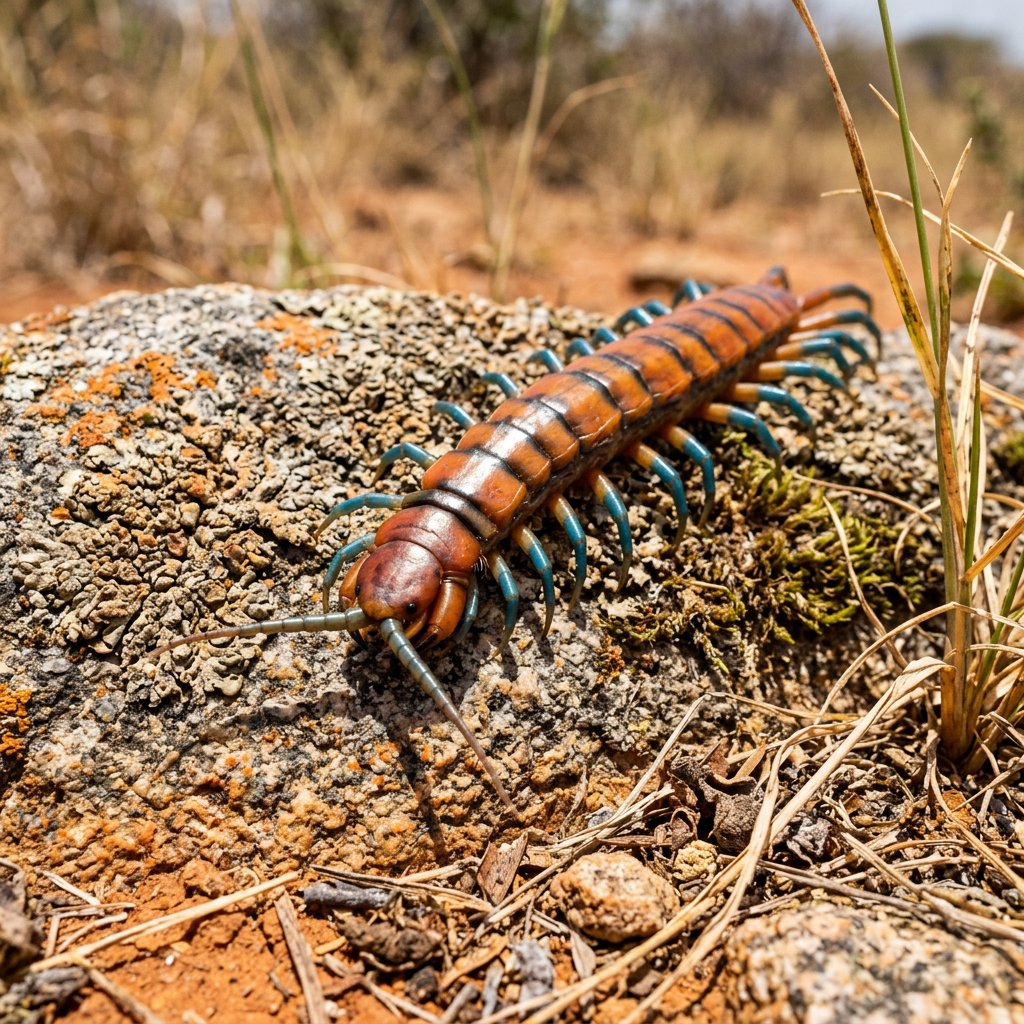
Known as the Tanzanian Blue Ring Centipede or the Red-headed Centipede, Scolopendra morsitans is a prehistoric-looking predator that has successfully marched across almost every continent. With its vibrant, warning-color bands and lightning-fast movements, it looks like something out of a sci-fi film. Despite its intimidating appearance, it plays a vital role as a "tiny tiger" in the leaf litter, keeping pest populations in check.
🔍 How to Identify
- 🦵 The Leg Count: Unlike millipedes, it has exactly one pair of legs per body segment, typically totaling 21 pairs of highly articulated, yellow or orange legs.
- 🎨 Segmented Armor: Its body is composed of flattened, chitinous plates often displaying a striking contrast of orange, reddish-brown, or yellow with dark blue or black bands at the joints.
- 🦂 Rear "Pincers": The last pair of legs is longer and thicker, trailing behind like a tail. While they look like stingers, they are actually used for grasping prey and warding off predators.
- 🎭 The Business End: At the front, it possesses "forcipules"—modified front legs that act like venomous fangs to paralyze its target.
🌲 Habitat & Ecology
- 🌑 The Night Shift: This centipede is a nocturnal specialist. During the day, it hides under flat rocks, rotting logs, or deep in garden mulch to stay cool and moist.
- ⚔️ Efficient Assassin: It is a generalist predator. While it mostly hunts crickets and roaches, larger individuals are known to overpower small lizards, frogs, and even mice.
- 🌍 Global Hitchhiker: Originally from the Old World, it is highly adaptable and has established itself in tropical and temperate gardens worldwide, often hitching a ride in potted plants.
⚠️ Safety & Toxicity
- 💥 Status: Venomous and highly defensive. While not considered "deadly" to a healthy adult human, its bite is notoriously painful—often compared to the sting of several hornets at once.
- 🚫 Keep Your Distance: It is a high-strung species that will bite if it feels pinned or cornered. Always wear thick gloves when moving old logs or stones in the garden.
- 🐾 Pets & Children: Small pets and curious children are at the highest risk. A bite can cause significant swelling, nausea, and localized "burning" pain. Seek medical advice if bitten to manage potential allergic reactions.
✨ Fun Fact
Unlike many other invertebrates that lay their eggs and leave, the Scolopendra morsitans mother is a devoted parent. She will coil her body around her eggs to protect them from predators and groom them constantly to prevent fungal growth until they are ready to hunt on their own!
More Details








