Info
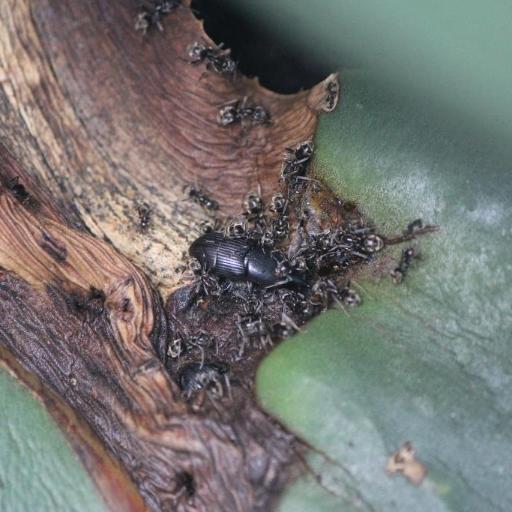
Known as the Agave Snout Weevil, this beetle is the ultimate nemesis for succulent enthusiasts and tequila producers alike. While it looks like a tiny, armored tank, its reputation in the desert is legendary for all the wrong reasons. This stealthy interloper is famous for its ability to bring down a massive Century Plant from the inside out, making it a "foe" to gardeners but a fascinating example of specialized evolution.
🔍 How to Identify
- 🎭 The Snout: Features a long, downward-curving rostrum (snout) which it uses like a drill to puncture tough plant skin.
- 🖤 Color & Texture: A dull, matte black or very dark charcoal body. Its wing covers (elytra) are etched with faint longitudinal grooves and tiny pits.
- 🛡️ Armored Body: About half an inch long with a very hard exoskeleton that makes it difficult to crush; it lacks the "shiny" finish of many other beetles.
🌵 Habitat & Ecology
- 🍴 Dietary Specialist: This weevil is a specialist that almost exclusively targets plants in the Agave and Yucca families. It is particularly drawn to large, mature specimens that are about to bloom.
- 🦠 The Silent Saboteur: The real destruction is a "tag-team" effort. The adult weevil punctures the plant to lay eggs, simultaneously introducing bacteria. When the larvae hatch, they feast on the fermenting heart of the plant, eventually causing the entire structure to collapse into a foul-smelling mush.
⚠️ Safety & Toxicity
- ✅ Human Safety: Completely harmless to humans and pets. They do not bite, sting, or possess any venom.
- 🚫 Botanical Threat: They are a "Level 10" threat to your garden. Because they attack the core of the plant underground or at the base, an infestation is often invisible until the plant is unsalvageable.
- 🐕 Pet Note: While not toxic, their hard shells could cause minor digestive upset if a curious dog decides to swallow one.
✨ Fun Fact
Despite being a major pest for Tequila production, this weevil is a master hitchhiker. It has spread from its native home in Mexico to Mediterranean climates all over the world by hiding deep inside ornamental Agaves shipped for landscaping!
More Details








