Info
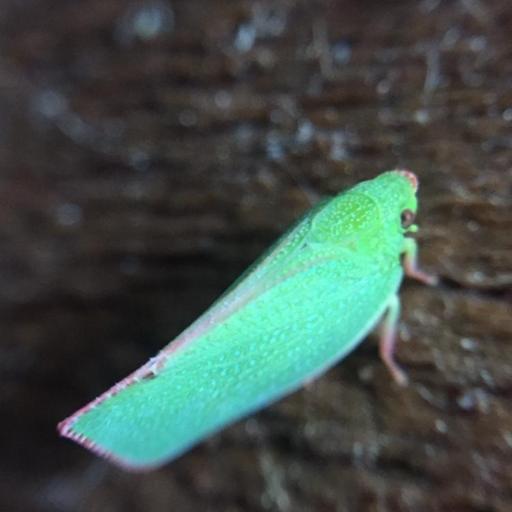
Meet the Siphanta acuta, more commonly known as the Torpedo Bug or Green Planthopper. Looking like a tiny piece of neon-green origami, this Australian native has become a common sight in gardens across Hawaii, California, and New Zealand. While they look like miniature stealth bombers, they are masters of camouflage, blending perfectly with the stems and leaves they inhabit.
🔍 How to Identify
- 📐 Geometric Shape: They possess a very distinct triangular, wedge-shaped profile. When resting, their wings are held vertically against their body, resembling a sharp "torpedo."
- 🟢 Vibrant Color: Adult bugs are a brilliant lime green, often accented with striking reddish or orange eyes that pop against their leafy body.
- 🕸️ Veined Wings: Their wings feature a delicate, net-like pattern of veins that mimic the natural structure of a leaf, providing excellent camouflage from birds.
🌲 Habitat & Ecology
- 🍃 The Sap Sucker: These insects are specialists that feed on plant sap. They are generalists, meaning they aren't picky eaters; you’ll find them on everything from citrus trees and grapes to ornamental hibiscus and eucalyptus.
- 🍯 Honeydew Producers: As they feed, they excrete a sticky, sugary substance known as "honeydew." This can attract ants and often leads to the growth of black sooty mold on the surface of leaves, which can block sunlight from the plant.
- 🚀 Skilled Jumpers: They don't just fly; they "hop." If you poke at one, it will use its powerful hind legs to launch itself away with incredible speed, appearing to vanish instantly.
⚠️ Safety & Toxicity
- 🛡️ Status: Completely harmless to humans and domestic pets.
- 🚫 No Sting or Bite: They do not possess a stinger or mouthparts capable of biting skin. Their only "weapon" is their ability to jump away from danger.
- 🌿 Plant Health: While safe for you, a large infestation can stress young plants. If you see many of them, a simple blast of water from a garden hose is usually enough to dislodge them.
✨ Fun Fact
The Torpedo Bug belongs to a group of insects that are sometimes called "plant-ghosts" in various cultures because of how they suddenly "vanish" into thin air when startled!
More Details








