Info
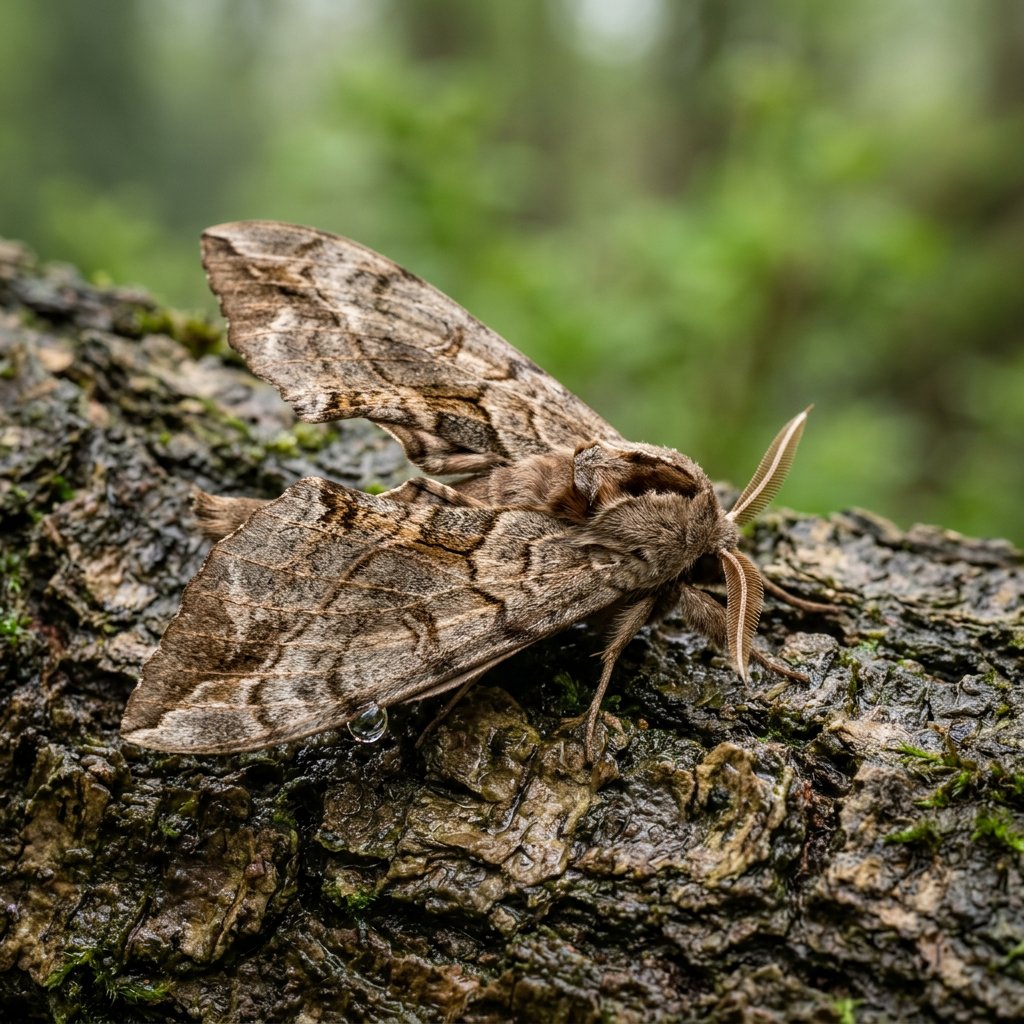
Meet the Eyed Hawk-moth, a master of disguise and a favorite among night-nature enthusiasts. Often mistaken for a piece of withered bark when resting, this moth hides a dramatic secret beneath its forewings. It is famous for its "startle display," using vivid, realistic eye spots to transform from a dull leaf into a perceived predator in a split second.
🔍 How to Identify
- 🦋 The Camouflage: When at rest, its forewings are mottled in shades of chocolate brown and soft grey, perfectly mimicking the texture of tree bark or a dried leaf.
- 👁️ The False Eyes: The hindwings—hidden until the moth is disturbed—feature striking pink patches with a large, bright blue "pupil" encircled by a black ring.
- 📐 The Silhouette: It has a thick, furry, torpedo-shaped body and narrow, pointed wings, which are often held in a distinctively "stealth-jet" posture.
🌲 Habitat & Ecology
- 🍎 Host Plants: You are most likely to spot this moth in gardens, orchards, or near riverbanks. Its bright green caterpillars love to munch on the leaves of willow, sallow, and apple trees.
- 🌙 Nocturnal Life: These moths are active primarily at night during the early summer months. They are frequently attracted to porch lights or garden lanterns.
- 🍴 The Fasting Adult: Surprisingly, the adult Eyed Hawk-moth lacks a functional mouth (proboscis). It lives entirely off the energy it stored as a caterpillar, surviving only a few weeks to find a mate and lay eggs.
⚠️ Safety & Toxicity
- 🛡️ Completely Harmless: Despite its large size and "scary" eyes, the Eyed Hawk-moth is entirely gentle. It has no mechanism for biting or stinging.
- 🚫 The Blue Horn: The caterpillar features a sharp-looking blue horn on its tail. While it looks intimidating to birds, it is actually soft to the touch and contains no venom or irritants.
- 🐾 Pet Friendly: They are non-toxic to curious cats and dogs, though their large, fluttering wings might trigger a frantic (but harmless) chase.
✨ Fun Fact
- 🎭 Psychological Warfare: When a bird approaches, the moth doesn't fly away immediately. Instead, it rhythmically pulses its wings to make the "eyes" blink. This trick is so effective that it can convince a hungry predator that it has accidentally stumbled upon an owl or a larger animal.
More Details








