Info
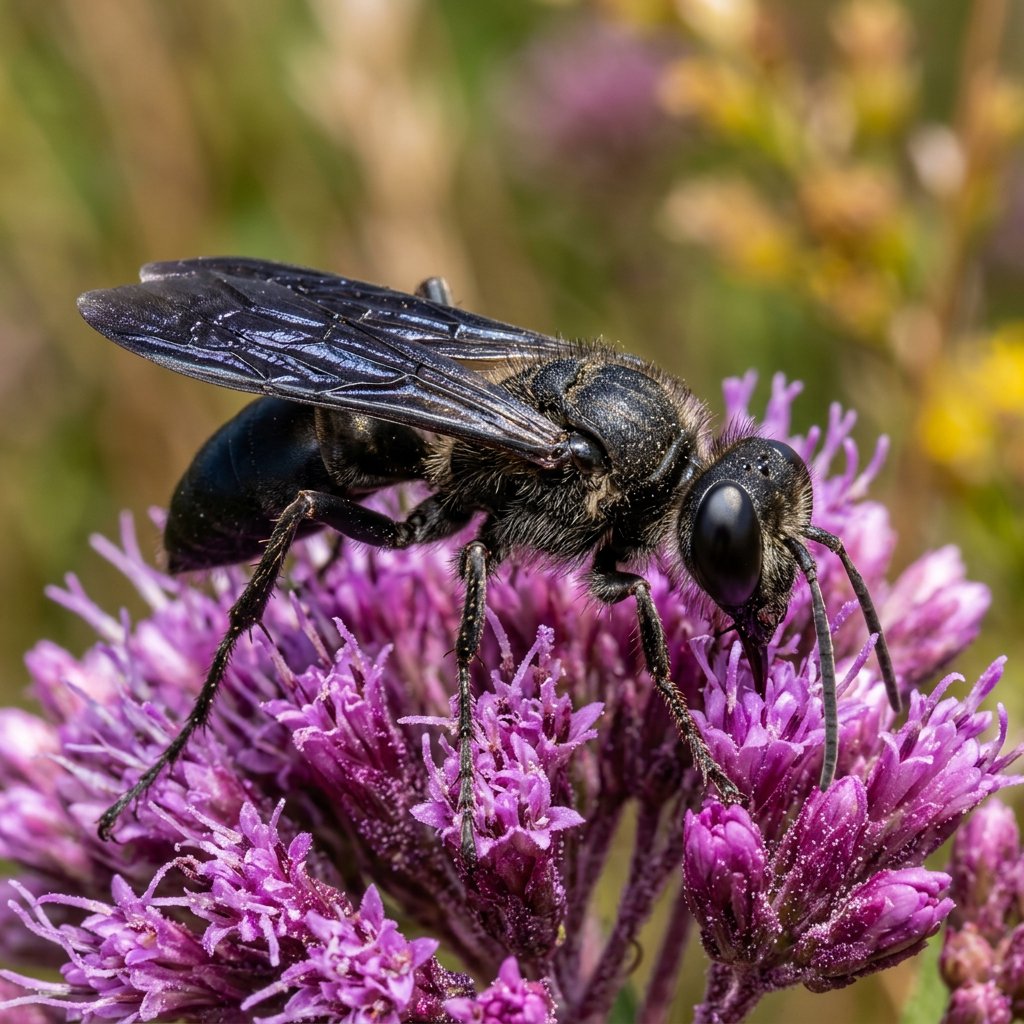
Known as the Great Black Wasp, this massive insect is the "goth" of the garden world. Clad entirely in midnight-black armor with shimmering wings, its size can be intimidating, but it is actually a beneficial "gentle giant" that prefers hunting garden pests over bothering humans.
🔍 How to Identify
- 🌑 Coloration: Entirely jet-black from its antennae to its legs, lacking the yellow or orange stripes seen on many other wasps.
- 🪽 The Wings: The wings have a distinct smoky, metallic sheen that reflects iridescent blue or violet light when the sun hits them.
- ⏳ Body Shape: It features a very long, thin "thread-waist" (petiole) that connects its powerful thorax to its teardrop-shaped abdomen.
🌲 Habitat & Ecology
- 🦗 The Katydid Hunter: Females are expert predators of grasshoppers and katydids. They paralyze their prey with a precise sting and drag them underground to provide a fresh "living pantry" for their larvae.
- 🌸 Pollination Role: While the larvae eat meat, the adults are strictly vegetarians. You will frequently see them peacefully sipping nectar from milkweed, goldenrod, or mountain mint.
- 🏜️ Solitary Life: Unlike hornets, these wasps are solitary. They dig individual burrows in soft, sandy soil or garden mulch rather than building large communal paper nests.
⚠️ Safety & Toxicity
- 🛡️ Low Aggression: Because they do not have a hive or queen to defend, they are remarkably docile. They will generally ignore humans unless they are squeezed or stepped on.
- 🐝 The Sting: If forced to defend themselves, they can deliver a painful sting. However, they are not prone to swarming, and the venom is generally not dangerous to non-allergic humans or pets.
✨ Fun Fact
- 📜 A Historical First: The Great Black Wasp holds a special place in history; it was the very first North American insect to be scientifically described in a report sent back to London in 1745!
More Details








