Info
Known as the Great Ash Sphinx, this moth is a master of camouflage that looks like a sleek, silver jet when resting on a tree trunk. Often mistaken for a small bird due to its impressive size and hovering flight, this moth is a common visitor to twilight gardens across North America. In folklore, sphinx moths are sometimes called "Hawk Moths" because of their powerful, predatory-looking flight patterns.
🔍 How to Identify
- 🛸 Streamlined Wings: The forewings are a sophisticated stone-grey, decorated with distinct black longitudinal dashes that help it blend perfectly into tree bark.
- 🦓 Banded Hindwings: If you catch a glimpse of the moth with its wings open, the hindwings are dark brown or black with two pale, blurry horizontal bands.
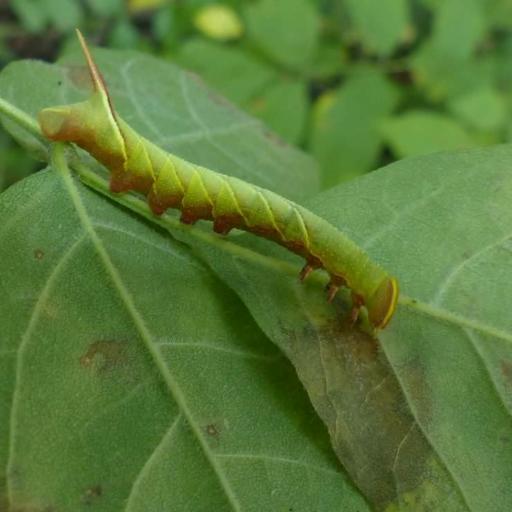
- 🐛 The "Horned" Larva: The caterpillar is a large, lime-green "hornworm" featuring seven diagonal white stripes and a distinctive blue or pinkish horn on its rear end.
🌲 Habitat & Ecology
- 🦋 Nighttime Pollinator: This insect is "crepuscular," meaning it is most active at dusk and dawn. It uses an incredibly long proboscis (tongue) to drink nectar from deep, tubular flowers while hovering mid-air.
- 🌳 Host Plant Specialist: True to its name, the larvae primarily feed on Ash trees, but they are also frequently found on Lilacs, Privet, and Cherry trees in suburban backyards.
⚠️ Safety & Toxicity
- 🛡️ Gentle Giant: Despite the intimidating "horn" on the caterpillar and the large size of the adult moth, they are completely harmless to humans and pets. They do not sting, bite, or carry venom.
- 🐾 Pet Safety: These moths and their larvae are non-toxic. If a curious dog or cat happens to swallow one, it is unlikely to cause anything more than a minor stomach upset from the "crunch."
✨ Fun Fact
This moth family is named "Sphinx" because the caterpillars have a unique defensive habit: when they feel threatened, they lift their front end and tuck their head in, resembling the Great Sphinx of Giza in a meditative, stony pose.
More Details








