Info
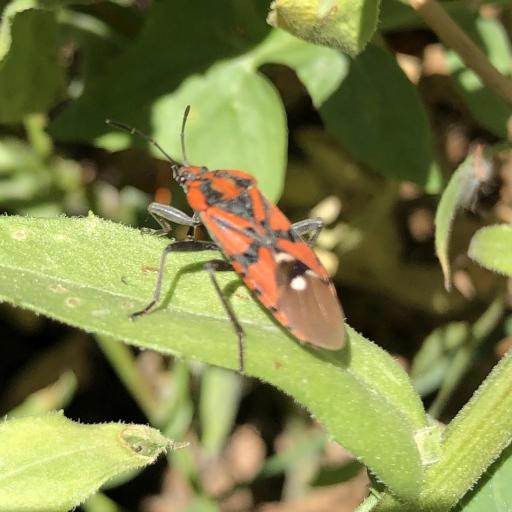
The Mediterranean Red Bug, also known as the Pandurus Seed Bug, is a master of visual drama. Clad in a striking crimson and jet-black "suit," it uses these bright colors to shout a warning to predators: "I taste terrible!" While it looks like it belongs in a high-fashion insect catalog, it is a common sight in sunny gardens and rocky terrains across Europe, Africa, and Asia.
🔍 How to Identify
- 🔴 The Pattern: A vibrant red body marked with a distinct black "X" or "V" shape across its back (the scutellum and wings).
- 🖤 The Wings: Unlike many lookalikes, the membranous tips of its wings are solid black, usually featuring two tiny, distinct white dots.
- 🧬 Body Shape: An elongated, oval-shaped body with long, dark antennae and slender legs that allow it to move quickly over foliage.
🌲 Habitat & Ecology
- 🌱 Toxic Gourmet: These bugs have a particular fondness for plants in the Milkweed and Oleander families. By feeding on these toxic plants, they absorb chemicals that make them unpalatable to birds and lizards.
- ☀️ Sun Seekers: They are most active in warm, dry climates. You will often find them congregating in large groups on seed pods or flower heads during the hottest part of the day, soaking up the heat to fuel their metabolism.
⚠️ Safety & Toxicity
- 🛡️ Status: Completely harmless to humans. They do not bite, sting, or carry diseases.
- 👃 Scent Defense: While they won't hurt you, they are "true bugs" and possess scent glands. If they feel threatened or are squashed, they release a pungent, medicinal odor that can be quite unpleasant.
- 🌿 Garden Impact: While they suck sap from seeds and stems, they rarely cause enough damage to kill a plant, making them a "neutral" visitor rather than a true pest.
✨ Fun Fact
The specific name Pandurus refers to the pandura, an ancient stringed instrument similar to a lute. Early naturalists thought the intricate black markings on the bug's back resembled the elegant silhouette of this classical instrument.
More Details








