Info
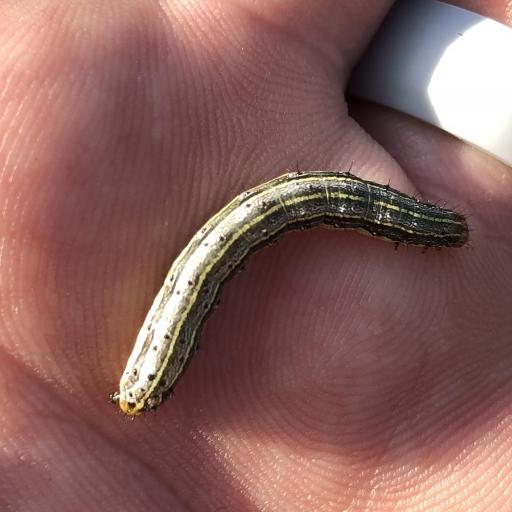
The Fall Armyworm isn't your average garden visitor; it’s a tiny soldier with an insatiable appetite. Known for their "scorched earth" tactics, these caterpillars earn their name by marching in massive groups across lawns and crops, leaving nothing but stems behind. While they eventually turn into nondescript moths, their larval stage is a legendary force of nature that can strip a field overnight.
🔍 How to Identify
- 🐛 The Inverted 'Y': The most reliable way to identify the caterpillar is the distinct, light-colored upside-down "Y" shape on its dark head.
- 🔲 The Tail Square: Look at the caterpillar’s rear; on the second-to-last segment, there are four dark dots arranged in a perfect square.
- 🦋 Mottled Wings: The adult moth is a master of camouflage, featuring mottled gray and brown forewings with a subtle white spot near the tips in males.
🌲 Habitat & Ecology
- 🌽 The Ultimate Generalist: These insects are famous for their lack of pickiness. While they prefer grasses and corn, they are known to devour over 80 different plant species, including ginger, beans, and even tobacco.
- 🌑 Nocturnal Navigators: The adult moths are strictly nocturnal. They spend their nights searching for lush greenery to lay their "fuzzy" egg masses, which are covered in protective scales that look like mold or lint to the untrained eye.
- 🏃 The Great Migration: Unlike many pests that overwinter in the soil, Fall Armyworms are perpetual travelers. They move northward every year, riding wind currents to reach new territories.
⚠️ Safety & Toxicity
- ✅ Safe to Handle: Despite their "scary" army reputation, these caterpillars do not bite, sting, or possess any venom. They are completely harmless to touch for humans and curious pets.
- 🥀 Garden Threat: While they aren't a physical threat to you, they are a "Code Red" for your landscape. Because they eat the "heart" or growing point of plants, a large infestation can kill a lawn or a vegetable patch in just a few days.
✨ Fun Fact
Fall Armyworms are world-class athletes of the insect world. Using high-altitude "jet streams," these moths can travel up to 300 miles in a single night—roughly the distance from London to Paris—to find a fresh place to feed!
More Details








