Info
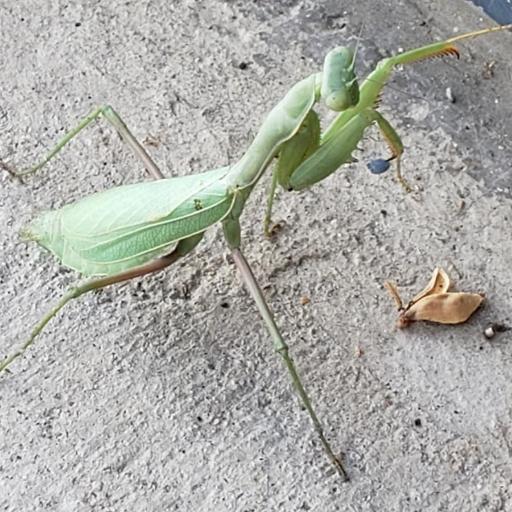
Known as the Arizona Bordered Mantis, Stagmomantis limbata is a majestic and helpful "garden guardian" native to the Southwestern United States and Mexico. While you might find it perched on your favorite shrub, it isn't a plant—it is one of nature’s most effective ambush predators. With a calm demeanor and a "bordered" wing design, it is a favorite among backyard naturalists.
🔍 How to Identify
- 🦋 The Bordered Wing: The most defining feature is the thin, pale white or light-blue border along the outer edge of the female's forewings.
- 🎨 Color Morphing: They are masters of camouflage, appearing in shades of leafy green, straw yellow, or dusty brown to match the foliage they live in.
- 📐 Body Shape: Females are stout and heavy-bodied, while males are much slimmer, more elongated, and are capable flyers. Both have the iconic "praying" forelegs lined with sharp spines for gripping prey.
🌲 Habitat & Ecology
- 🦗 The Patient Hunter: These mantids are generalist predators. They sit perfectly still for hours, waiting for garden pests like flies, moths, and small grasshoppers to wander too close before striking with lightning speed.
- 🌵 Arid Lovers: They thrive in warm, dry environments. You will typically find them in desert scrub, chaparral, or urban gardens where there is plenty of sunlight and high-reaching branches.
- 🥚 Winter Survival: In late autumn, females lay a hardened, foam-like egg case called an "ootheca" on twigs or walls. This protective casing allows the next generation to survive the winter chill.
⚠️ Safety & Toxicity
- 🛡️ Status: Completely harmless and non-venomous. They are considered "beneficial insects" because they provide natural pest control without the need for chemicals.
- 🧤 Handling: While they are docile, a large adult (especially a female) may deliver a small pinch with her mandibles or a scratch with her spiked legs if handled roughly. They are best observed from a slight distance or allowed to crawl onto an open palm.
✨ Fun Fact
Unlike most insects, the Arizona Bordered Mantis has a highly flexible neck and can turn its head 180 degrees to watch you—or a potential meal—without moving the rest of its body!
More Details








