Info
Known as the False Black Widow or the Cape Cobweb Spider, this glossy arachnid often gives homeowners a fright due to its striking resemblance to its more dangerous cousins. Originally from South Africa, it has become a world traveler, famously establishing itself in New Zealand and Australia. While its dark, bulbous body looks menacing, it is a master of "messy" architecture, preferring to stay tucked away in a dark corner rather than seeking out a confrontation.
🔍 How to Identify
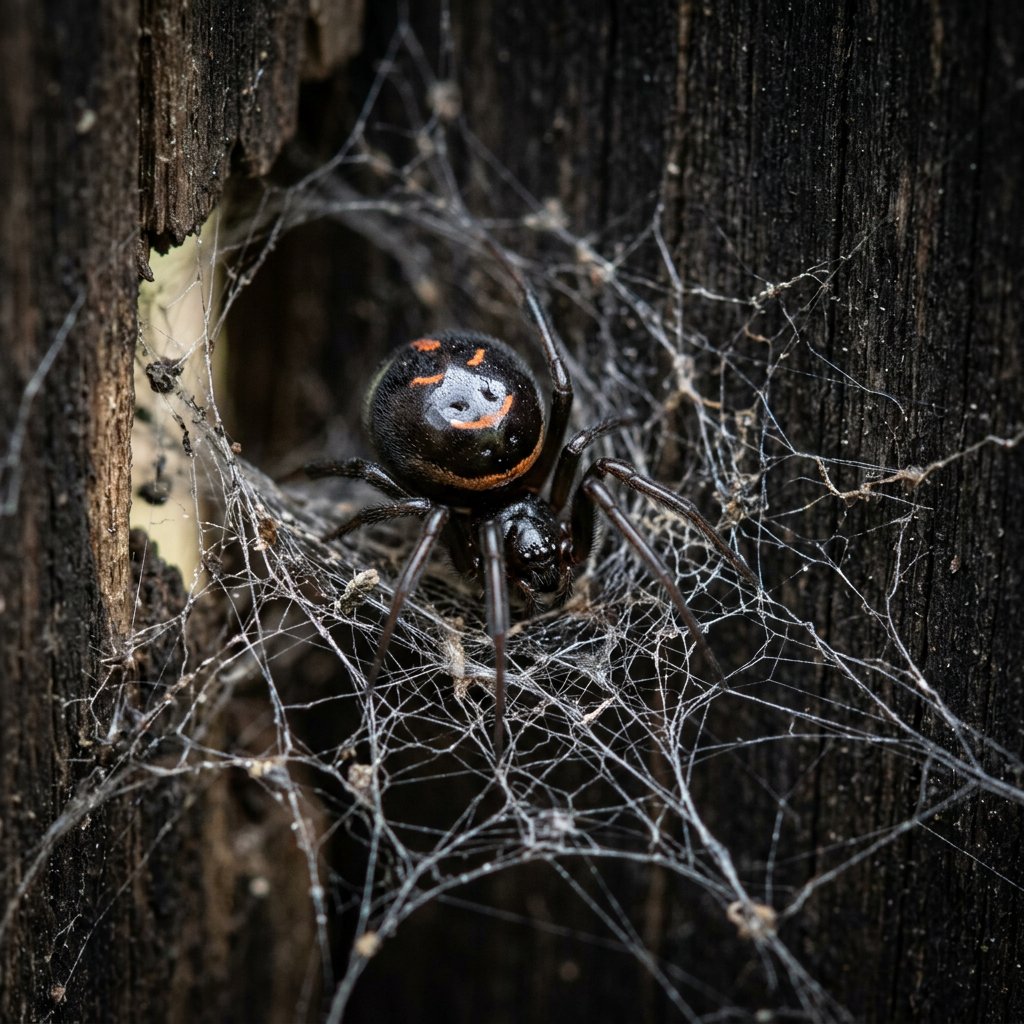
- 🕷️ The Abdomen: It possesses a large, bulbous, and incredibly glossy abdomen that resembles a dark grape or a polished piece of obsidian.
- 🎨 Coloration: Typically a deep "dark chocolate" brown or solid jet-black. Unlike the true Black Widow, it lacks the bright red hourglass marking on its underside.
- 🕸️ The Web: They do not build "pretty" symmetrical webs; instead, they create tangled, irregular "cobwebs" that look like a messy collection of silk strands in a corner.
🌲 Habitat & Ecology
- 🏚️ Preferred Real Estate: As the name "Cupboard Spider" suggests, they love dark, undisturbed nooks inside homes, garages, woodpiles, or under garden furniture.
- 🦗 Pest Control: These spiders are excellent natural exterminators. They are generalist predators, catching and consuming ants, beetles, and even other spiders that wander into their sticky traps.
⚠️ Safety & Toxicity
- 💥 The Sting/Bite: They are venomous, but not considered medically significant to healthy adults. A bite is often compared to a bee sting, causing localized pain, redness, and sometimes a dull ache for a few hours.
- 🐾 Precautions: They are non-aggressive and usually play dead or run away when disturbed. However, bites can occur if they are accidentally squeezed (e.g., inside a shoe or garden glove). Keep curious pets away from their webs to avoid a painful "nip."
✨ Fun Fact
In New Zealand, the Steatoda capensis has become so successful that it is actually out-competing the native, endangered, and much more venomous Katipō spider for habitat and food!
More Details








