Info
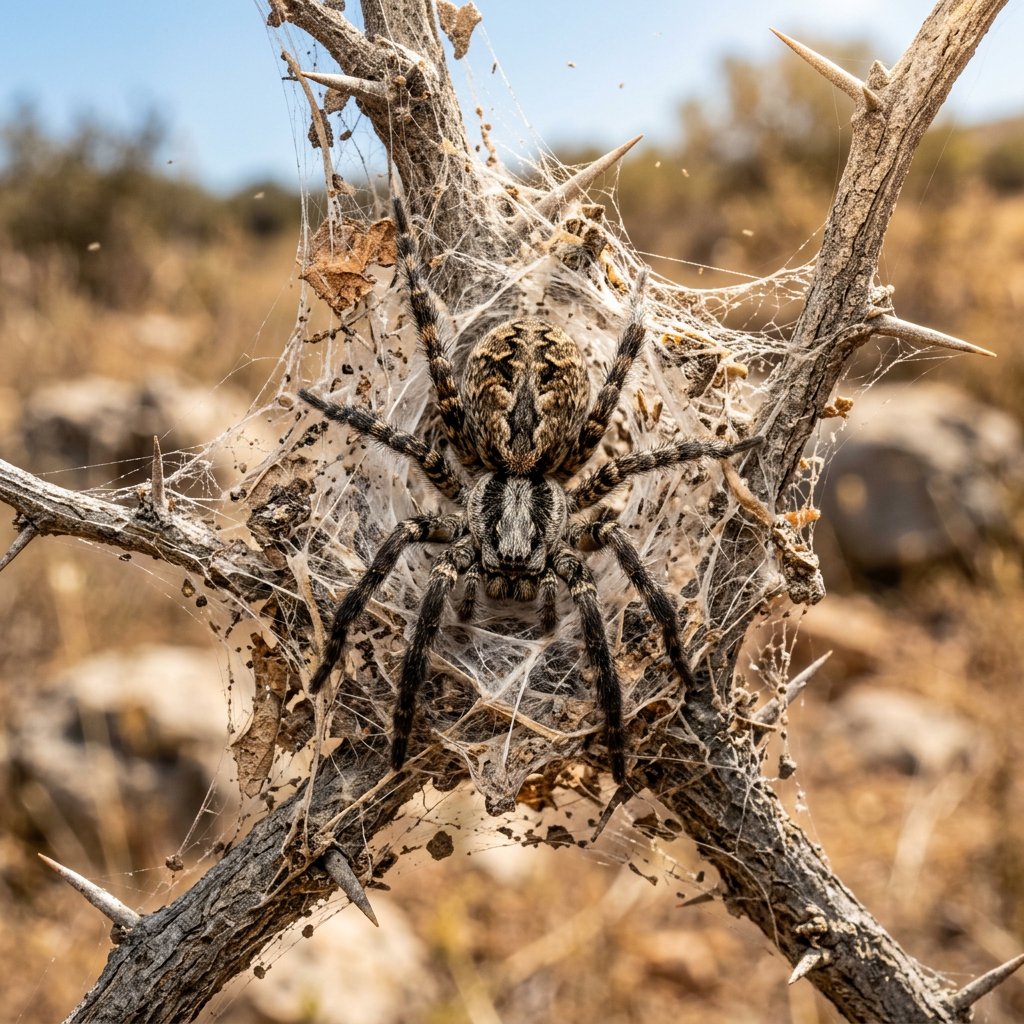
Known as "Velvet Spiders," the Stegodyphus genus represents the teddy bears of the arachnid world. These creatures are famous for their incredibly soft, plush-like appearance and, in some species, a rare social lifestyle that mimics a pride of lions. Whether they are solitary or living in a massive colony, they are the architects of some of the stickiest silk structures in nature.
🔍 How to Identify
- 🧶 Velvety Texture: Their bodies are covered in a dense carpet of short, fine hairs (setae), giving them a matte, fabric-like look rather than the shiny exterior of many other spiders.
- 🕷️ Blocky Head: They possess a large, high, and somewhat square cephalothorax (the front body segment) that gives them a sturdy, "stubby" silhouette.
- 👀 Face-Like Eyes: They have a distinct arrangement of eight eyes, with two large ones in the center that often give them a curious or "cute" expression.
🌲 Habitat & Ecology
- 🕸️ Woolly Webs: They produce "cribellate" silk, which is non-sticky but hackled into a microscopic wool-like texture that physically snags the legs of prey like Velcro.
- 🤝 Social Colonies: Unlike most spiders that eat each other, several Stegodyphus species live in massive permanent nests where hundreds of individuals cooperate to hunt, build, and raise young together.
- 🍃 Bush Dwellers: You will typically find their dense, messy silk retreats woven into the branches of sturdy shrubs or low-hanging trees in arid or tropical regions.
⚠️ Safety & Toxicity
- 🛡️ Docile Nature: These spiders are notably non-aggressive and will almost always choose to retreat into the depths of their silk tunnels rather than confront a human.
- 🩹 Low Risk: While they do use venom to subduing insects, it is not considered medically significant to humans; a bite is rare and typically results in minor local irritation similar to a small bee sting.
✨ Fun Fact
🤱 The Ultimate Sacrifice: Stegodyphus mothers practice a dramatic form of maternal care called matriphagy. After her eggs hatch, the mother’s body begins to liquefy internally, and she willingly allows her spiderlings to consume her so they have the best possible start in life.
More Details








